French Farmers Persist in Protests Against EU-Mercosur Trade Deal Amid Blockade Lifting
Despite lifting some blockades, French farmers intensify protests against the EU-Mercosur trade deal, citing fears over cheaper imports and agricultural instability.
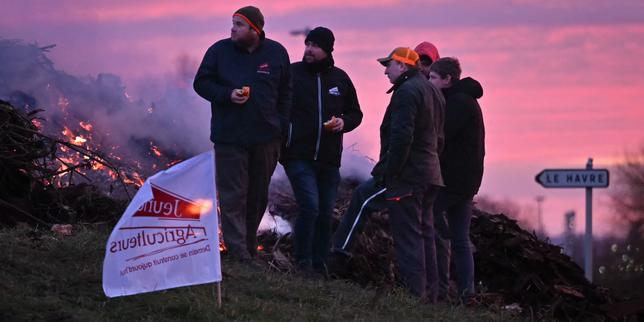
Key details
- French farmers have established blockades on major transport routes including A1 and A63 highways and the port of Le Havre.
- The blockade on A63 in Bayonne was lifted after prefect intervention and negotiations with farmers.
- Farmers fear the trade deal will flood markets with cheaper imports, harming local agriculture.
- Protests feature filtering blockades, free tolls, truck inspections, and tractor convoys with slogans against the agreement.
- The agricultural sector faces additional pressures including disease outbreaks and structural difficulties amid the ongoing protest movement.
French farmers continue their protests against the EU-Mercosur trade agreement with demonstrations marking key transport routes despite the lifting of some blockades. On January 11, farmers assembled around the port of Le Havre and established blockades on major highways such as the A1 and A63. In Bayonne, about 100 farmers lifted their blockade on the A63 after negotiations with prefect Jean-Marie Girier, who threatened the use of force, leading to discussions that cleared the way for resumption of traffic without damage.
Protesters fear the agreement, expected to create one of the world's largest free trade zones, will flood the market with cheaper South American imports that undercut French agricultural products. Their actions include filtering blockades on highways from Lille to Paris, free tolls, and truck inspections at toll booths on the A16 and A26. A convoy of tractors accompanied by slogans protesting "Mercosur, Ukraine, DNC, too much is too much" demonstrates growing farmer anger. Damien Salomon, co-president of rural coordination in Pas-de-Calais, emphasized there is "no planned end" to the protests, which depend on forthcoming government responses.
These demonstrations unfold amid an already "explosive" agricultural climate in France, with cattle breeders struggling against a dermatose outbreak and structural challenges, heightening fears about competitiveness under the new trade deal. The Coordination rurale also planned a blockade of a petroleum depot in La Rochelle, while similar protests spread across Europe including Italy, Poland, and Ireland. Farmers remain resolute in maintaining pressure on authorities and the EU to reconsider the pact that threatens their livelihoods.
Source articles (3)
-
lefigaro.fr Jan 12, 2026
«Pas de clap de fin prévu» : les images des agriculteurs mobilisés sur l’A1 contre le Mercosur
-
liberation.fr Jan 12, 2026
Signature de l’accord avec le Mercosur : pour les éleveurs, «le combat de la compétitivité est perdu d’avance»
-
lemonde.fr Jan 12, 2026
Accord UE-Mercosur : les agriculteurs maintiennent la pression, le blocage de l’A63 à Bayonne est levé