Investigation and Political Turmoil in France Following Quentin Deranque's Murder
The murder of Quentin Deranque has triggered a criminal investigation and fierce political debate in France, with government officials accusing leftist groups and LFI denying moral responsibility.
Key details
- Quentin Deranque was fatally beaten on February 12 while protecting feminist activists in Lyon.
- Investigations focus on 'homicide volontaire' and 'violences aggravées' with suspicion on the antifascist movement.
- Government officials, including Interior Minister Laurent Nuñez, link the attack to ultraleft groups.
- LFI and leader Jean-Luc Mélenchon face accusations of fostering a violent climate, which they reject.
- Political tension escalates amid cautious statements from Lyon's prosecutor and polarized public debate.
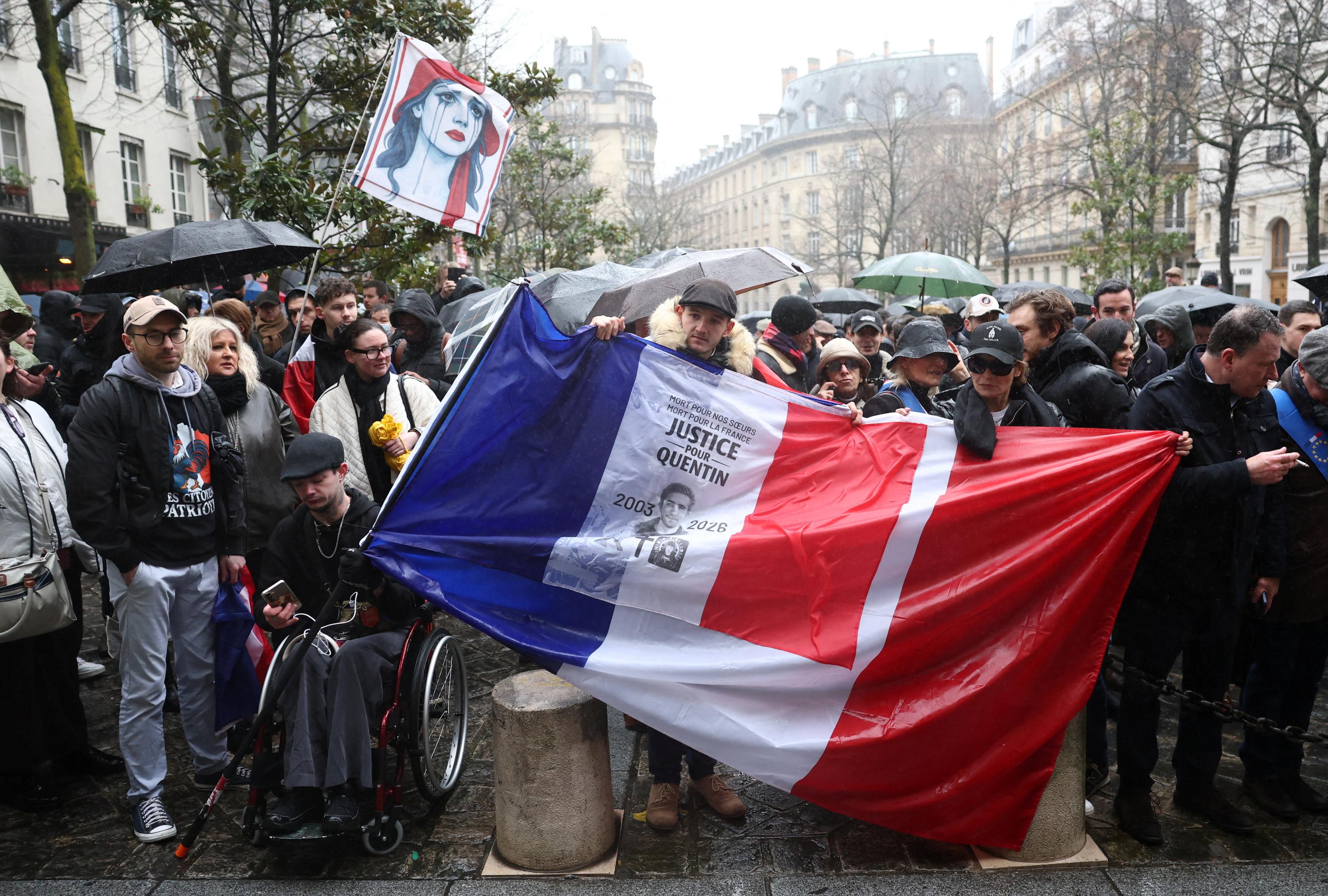
Quentin Deranque, a 23-year-old student associated with nationalist circles, was brutally beaten to death on February 12 while volunteering to protect feminist activists during a protest against Rima Hassan at the IEP of Lyon. Lyon's public prosecutor, Thierry Dran, revealed that at least six masked individuals participated in the assault, prompting the opening of two criminal investigations: one for 'homicide volontaire' and another for 'violences aggravées', considering the weapons used and the concealment of the assailants' identities. No arrests have yet been made, and the investigation is focusing on the 'ultragauche' or antifascist movement's possible involvement.
The government has entered the political fray, with Interior Minister Laurent Nuñez pointing to 'ultragauche' elements but not confirming ties to any specific group, such as the dissolved antifascist organization 'Jeune Garde'. The French government's spokesperson, Maud Bregeon, notably attributed a moral responsibility to La France Insoumise (LFI), alleging that the party fosters a violent climate through acknowledged links to extremist ultraleft groups.
LFI and its leader, Jean-Luc Mélenchon, have faced mounting criticism, deemed by many as contributing to societal conflict. Mélenchon has defended himself against accusations, expressing fatigue over associations with his past controversial statements and accusing opponents of diabolization. Political analyst Thomas Guénolé described Mélenchon's approach as a deliberate 'motor of explosion,' aimed at sparking political controversy to amplify his message.
Public and political reactions are polarized, ranging from condemnation across the left, right, and government, with LFI denouncing the accusations as baseless. Prosecutor Thierry Dran has maintained cautious communication due to the ongoing investigation, emphasizing the need to await further evidentiary developments. This tragedy has ignited a fierce national political debate about extremist political violence and the responsibilities of political parties in shaping public discourse.
Source articles (5)
-
lefigaro.fr Feb 16, 2026
Mort de Quentin Deranque à Lyon : le récit minute par minute d’un lynchage qui choque la France
-
Mort de Quentin : l’exécutif cible La France insoumise, tout en la renvoyant dos à dos avec le RN
-
Mort de Quentin Deranque : de la « conflictualité » au « bruit et à la fureur », la sémantique hostile de Mélenchon
-
liberation.fr Feb 16, 2026
Mort de Quentin Deranque à Lyon : une enquête pour homicide volontaire ouverte, des témoins entendus et des auteurs pas encore identifiés
-
Mort de Quentin Deranque : accusée de porter «une responsabilité», LFI fustige une «diabolisation»
Source comparison
Date of incident
Sources report different dates for the incident leading to Quentin Deranque's death.
lefigaro.fr
"Quentin Deranque was brutally beaten to death on February 12."
liberation.fr
"Following the death of a nationalist activist on Saturday, February 14."
Why this matters: One source states the incident occurred on February 12, while another claims it happened on February 14. This discrepancy affects the timeline of events surrounding the incident.