Investigations and Political Tensions Escalate After Quentin Deranque's Death in Lyon
Following the death of nationalist activist Quentin Deranque, authorities in Lyon have opened investigations into hate crimes during a commemorative march amid nationwide political tensions and diplomatic fallout.
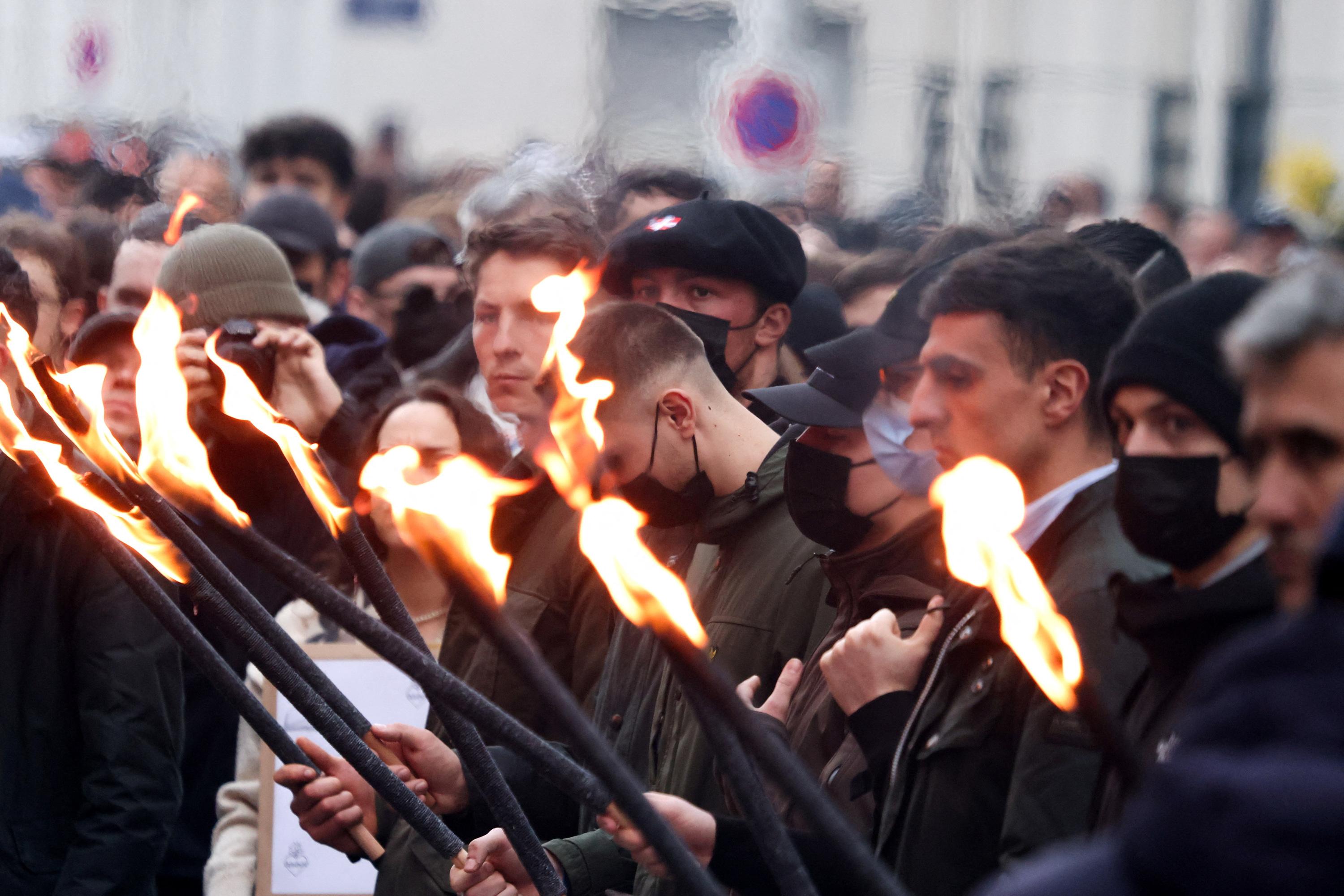
Key details
- Two investigations opened after march for Quentin Deranque, focusing on Nazi salutes and racist insults.
- 3,200 people attended the march in Lyon honoring Deranque.
- French government condemned insensitive comments from the Trump administration regarding Deranque's death.
- Controversy at Sciences Po Paris over professors' comments justifying Deranque's death.
- Violence erupted at the Salon de l’agriculture, injuring law enforcement officials.
In the wake of the death of nationalist activist Quentin Deranque in Lyon on February 14, French authorities have opened multiple investigations and political tensions continue to escalate nationwide. Around 3,200 people marched in Lyon to honor Deranque, during which law enforcement documented instances of Nazi salutes and racist and homophobic insults. This has led the Lyon public prosecutor's office to initiate two separate inquiries: one focused on the glorification of crimes against humanity due to Nazi salutes and another addressing racist and homophobic insults. These investigations fall under the category of public provocation to hatred or violence and are being handled by the Interdepartmental National Police Directorate of Rhône (DIPN69). Rhône prefect Fabienne Buccio confirmed formal reports were lodged following the demonstration and stated that any reprehensible gestures or statements identified on social media will be promptly reported to prosecutors as per the Interior Ministry's instructions.
The incident has spurred political reactions beyond Lyon. French Foreign Minister Jean-Noël Barrot publicly condemned remarks from the Trump administration about Deranque's death, calling them insensitive. This prompted the French government to summon the U.S. Ambassador Charles Kushner to address the diplomatic tensions. Meanwhile, controversy has erupted among some professors at Sciences Po Paris, where some suggested in a WhatsApp group that Deranque's death was justified, fueling a divisive discourse over the nationalist's demise.
Violence related to the heightened political climate also broke out recently at the Salon de l’agriculture, where law enforcement officers faced assaults and witnessed weapons such as knives being brandished. This reflects a country deeply unsettled as it approaches the municipal elections later this year, with fears mounting over the influence of extreme factions including far-left groups. Authorities have launched investigations into misinformation and digital warfare that could impact public opinion during this contentious political period.
As the atmosphere grows increasingly fraught, officials stress vigilance in curbing hate speech and violence, underscoring the fragile state of political and social cohesion in France in the aftermath of Deranque's death.
Source articles (3)
-
lefigaro.fr Feb 23, 2026
Marche pour Quentin à Lyon : deux enquêtes ouvertes pour des saluts nazis et des injures racistes
-
Le maire du 6e arrondissement somme la Ville de Paris de verser les financements dus au collège Stanislas
-
20minutes.fr Feb 24, 2026
Mort de Quentin Deranque à Lyon : Actualités, vidéos, images et infos en direct