New Voting Rules and Tight Races Mark the 2026 Paris Municipal Elections
Paris’s 2026 municipal elections will feature new voting rules and competitive races amid notable political uncertainty, with voters facing a complex ballot structure and reduced majority premiums.
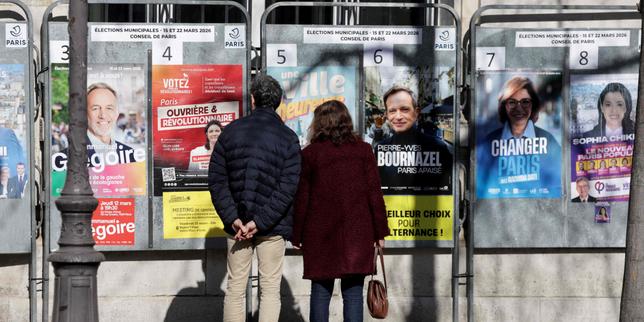
Key details
- Municipal elections on March 14-15, 2026, follow new PLM reform rules reducing majority premium from 50% to 25%.
- Voters will cast separate votes for district and municipal councillors, possibly leading to differing political majorities.
- Leading Paris candidates include Emmanuel Grégoire (PS) and Rachida Dati (LR), with others vying for viability.
- Turnout is anticipated between 65% and 71%, higher than prior cycles, amid broader political significance ahead of 2027 presidential elections.
France’s municipal elections, scheduled for March 14 and 15, 2026, promise to be a pivotal moment in local governance, especially in major cities like Paris, Lyon, and Marseille. This election cycle introduces significant changes due to the PLM reform of August 11, 2025, which profoundly alters voting procedures and seat allocation in councils, contributing to electoral uncertainty.
One of the major reforms is the reduction of the majority premium in municipal councils from 50% to 25%. Previously, the leading list was guaranteed half of the council seats, facilitating an absolute majority. Under the new system, the leading list secures only a quarter of the seats, making it considerably harder to form a majority. For example, a candidate receiving around 33% of votes in a multi-list race may win approximately 80 out of 163 seats but still lack a majority.
Additionally, voters will cast separate ballots for district and municipal councillors, potentially resulting in district councils and the central council having differing political orientations. Despite this, the central mayor retains authority over key city functions like urban planning.
In Paris, the election race features leading contenders Emmanuel Grégoire of the Socialist Party and Rachida Dati from Les Républicains, with other candidates such as Pierre-Yves Bournazel (Horizons) and Sophia Chikirou (LFI) also competing vigorously to secure at least 10% of the vote needed to advance. The dynamics of alliances, candidate withdrawals, and the fragmentation of votes make the outcome uncertain.
Nationwide, about 48.7 million voters will choose from roughly 900,000 candidates across 50,000 lists. While around 93% of communes are expected to decide mayoral races in the first round due to limited opposition, major cities exhibit complex, competitive contests. The elections are also notable for expected voter turnout between 65% and 71%, higher than in recent years, reflecting increased public engagement.
This municipal election is widely viewed as a political prelude to the 2027 presidential election, with key political figures using it to consolidate influence and gauge public support.
In summary, the 2026 Paris municipal elections exemplify a transformed electoral landscape characterized by new voting rules and fragmented vote distributions, intensifying the uncertainty around who will control the city’s council and mayor’s office.
Source articles (2)
-
lemonde.fr Mar 14, 2026
Municipales 2026 : les réponses à vos questions sur le nouveau mode de scrutin de Paris, Lyon et Marseille
-
boursorama.com Mar 14, 2026
Municipales: jour de cristallisation avant un premier tour décisif
Source comparison
Election date
Sources report different dates for the municipal elections.
lemonde.fr
"On March 15, 2026, voters in Paris, Lyon, and Marseille will participate in the first round of municipal elections."
boursorama.com
"The municipal elections in France are scheduled for March 12, 2026."
Why this matters: One source states the elections are on March 15, 2026, while the other claims they are on March 12, 2026. This discrepancy is significant as it affects when voters will participate in the elections.