President Macron Mobilizes Industry for Accelerated Electrification of France
President Macron convenes industry leaders to accelerate France's national electrification plan, aiming to boost energy sovereignty, reduce emissions, and increase electricity's share in energy consumption to 38% by 2035.
Key details
- President Macron formed a 'team of France for electrification' with industry leaders at the Élysée Palace.
- The government aims to increase electricity’s share in final energy consumption from 27% in 2023 to 38% by 2035.
- Pacts were signed focusing on electric mobility, industrial, transport, and building electrification.
- By 2026, over 95% of France’s electricity is generated from low-carbon sources.
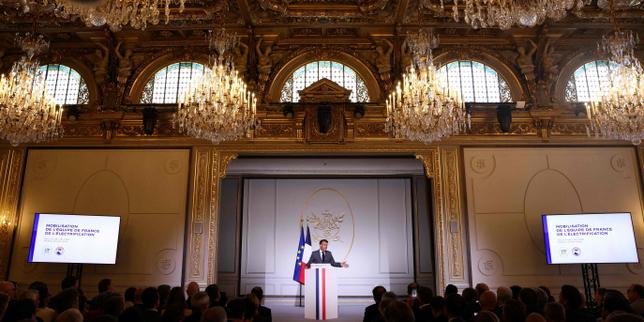
On May 26, 2026, President Emmanuel Macron convened a high-level meeting at the Élysée Palace with nearly 90 business leaders and around 40 representatives from sectors including energy, transport, and construction to form the "team of France for electrification." This gathering aimed to reinforce the government's comprehensive electrification plan announced in April 2026, which seeks to accelerate the shift from fossil fuels towards greater electrification across the nation.
Macron emphasized electrification as a strategic priority crucial for enhancing France's energy sovereignty, economic competitiveness, and job creation while reducing carbon emissions. Highlighting that in 2023, electricity constituted only 27% of France's final energy consumption, he set a government target to raise this figure to 38% by 2035, as outlined in the third multiannual energy program released in February.
The meeting also featured the signing of multiple pacts by key economic actors committing to support four priority areas: electric mobility, industrial electrification, transport electrification, and building electrification. These commitments signal a collective mobilization of industry to make France a European leader in a decarbonized economy.
Background initiatives underpinning this electrification push include France’s energy transition strategy launched by Macron in Belfort in February 2022, which focuses on reviving nuclear energy through the EPR2 program, boosting renewable energy capacity, and expanding the electric vehicle charging infrastructure. Remarkably, by 2026, over 95% of France’s electricity is generated from low-carbon sources, positioning the country as a global leader in clean electricity production.
Macron underscored that electrification is not just an environmental necessity but also a contemporary economic opportunity. The government’s measures include incentives for building renovations and electric vehicle purchases, fostering increased electricity demand and accelerating industrial electrification. This mobilization reflects a coordinated effort between the public sector and industry to transform France's energy system and achieve ambitious decarbonization and energy independence goals in the coming decade.
Source articles (2)
-
lemonde.fr May 26, 2026
Emmanuel Macron cherche à mobiliser les industriels pour accélérer l’électrification de la France
-
elysee.fr May 26, 2026
Réunion de l'équipe de France de l'électrification.
Source comparison
Origin of the electrification plan
Sources disagree on who introduced the electrification plan
lemonde.fr
"the electrification plan was introduced on April 23 by President Emmanuel Macron"
elysee.fr
"the electrification plan was introduced by the Prime Minister in April 2026"
Why this matters: One source states that the plan was introduced by President Macron, while the other attributes it to the Prime Minister. This difference affects the understanding of leadership and responsibility for the initiative.