Prime Minister Sébastien Lecornu Invokes Article 49.3 to Pass 2026 State Budget Amid Political Tensions
Prime Minister Sébastien Lecornu invoked Article 49.3 to pass the 2026 budget revenue section without parliamentary vote, facing opposition censure motions but securing Socialist Party’s reluctant support.
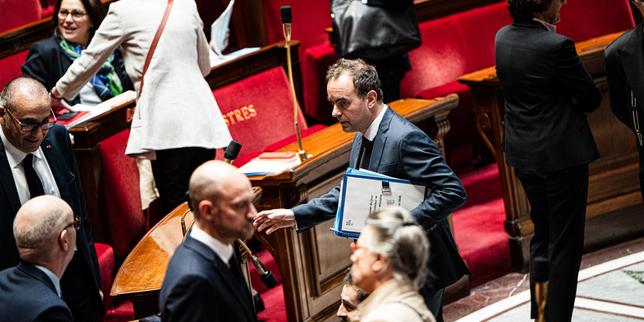
Key details
- Prime Minister Sébastien Lecornu invoked Article 49.3 to pass the revenue section of the 2026 state budget without a parliamentary vote.
- Lecornu expressed regret and bitterness over using Article 49.3, acknowledging a semi-failure in the budget negotiation process.
- The budget aims to keep the deficit at 5% of GDP while addressing military and agricultural crises.
- Opposition parties France insoumise and Rassemblement nationale announced motions of censure, but the Socialist Party will not support them, securing Lecornu’s position.
On January 20, 2026, French Prime Minister Sébastien Lecornu took the significant step of invoking Article 49.3 of the Constitution to push through the revenue portion of the 2026 state budget without a parliamentary vote. This constitutional tool allows the government to bypass the National Assembly’s vote unless a motion of censure is successfully filed, a risk Lecornu knowingly undertook to ensure swift budget approval amid political gridlock.
Lecornu expressed "regret" and "bitterness" about resorting to Article 49.3, acknowledging a "semi-failure" of his prior approach to passage through negotiation. He had previously pledged to avoid this method but faced stalled discussions with opposition parties. The budget aims to contain the deficit at 5% of GDP and addresses pressing challenges such as military funding and the agricultural crisis.
President Emmanuel Macron praised the budget, highlighting its role in maintaining fiscal responsibility and fostering national progress. The government recognized it was impossible to obtain a majority due to opposition from the ecologists, communists, and the Socialist Party, which refused to support the budget after its initial rejection in December 2025.
Government spokesperson Maud Bregeon described the use of 49.3 as "more democratic and respectful" of parliamentary prerogatives compared to an ordinance budget, which bypasses parliamentary debate entirely.
In reaction, opposition parties including France insoumise and Marine Le Pen's Rassemblement nationale announced their intention to file motions of censure against the budget, criticizing it as irresponsible. However, the Socialist Party reportedly will not support these motions, considering the 49.3 invocation the "least bad solution" and citing concessions won during negotiations. This stance effectively secures Lecornu’s continuation as Prime Minister, with the Socialist Party's non-censure action providing critical support.
The finance bill’s adoption is expected in the coming days, marking a tentative resolution in the ongoing political struggle over France’s 2026 budget framework.
Source articles (4)
-
lemonde.fr Jan 20, 2026
Budget 2026 : Sébastien Lecornu engage la responsabilité de son gouvernement sur la partie recettes, premier 49.3 d’une série de trois
-
france24.com Jan 20, 2026
Budget : Lecornu engage par un 49.3 la responsabilité de son gouvernement sur la partie "recettes"
-
Budget 2026 : comment Sébastien Lecornu va défendre l'usage du 49.3 ?
-
liberation.fr Jan 20, 2026
Sébastien Lecornu dégaine son premier 49.3 sur le budget
Source comparison
Socialist Party's position on censure
Sources report conflicting information about the Socialist Party's stance on censure motions.
lemonde.fr
"The Socialist Party is expected not to support these motions, believing that the 49.3 approach is the 'least bad solution'."
liberation.fr
"This move is bolstered by the Socialist Party's announcement of non-censure, which ostensibly secures his position at Matignon."
Why this matters: One source indicates that the Socialist Party is expected not to support censure motions, while another suggests their announcement of non-censure secures Lecornu's position. This affects the understanding of the political dynamics surrounding the budget approval.