Ariane-6 Successfully Launches Two Galileo Satellites, Boosting European Space Autonomy
Ariane-6's December 17 launch of two Galileo satellites reinforces Europe's independent space navigation system and boosts future European access to space.
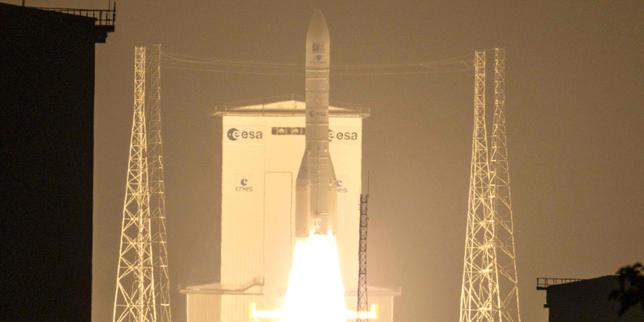
Key details
- Ariane-6 successfully launched two Galileo satellites into medium Earth orbit on December 17, 2025.
- The mission marks the fourth commercial flight of Ariane-6, enhancing Europe's space autonomy.
- Galileo now totals 34 satellites, improving civilian geolocation independent of GPS.
- Arianespace aims to increase commercial launches in 2026 with upgraded Ariane-6 missions, including Amazon's Project Kuiper.
- The launch follows prior reliance on SpaceX due to suspension of Soyuz flights after geopolitical tensions.
On December 17, 2025, the Ariane-6 rocket launched two new Galileo satellites, SAT33 and SAT34, from the Guiana Space Centre in Kourou, French Guiana. These satellites were placed into a medium Earth orbit at approximately 22,922 km, with separation occurring nearly four hours after the 2:01 AM local time launch under favorable weather conditions despite the rainy season.
This mission marks Ariane-6's fourth commercial flight and is a key milestone for European space capabilities, especially following geopolitical disruptions that impacted access to space. The launch enhances the Galileo satellite constellation to a total of 34 satellites, improving the system's accuracy, availability, and robustness. Galileo provides precise civilian geolocation services independent of the American GPS, reinforcing Europe's strategic autonomy and sovereignty in space technology.
David Cavaillolès, executive president of Arianespace, emphasized that Ariane-6 has demonstrated both reliability and precision with this successful mission. The European Space Agency had previously turned to SpaceX launches in September 2024 to maintain the constellation after suspending Soyuz launches due to the Russian invasion of Ukraine.
Looking ahead, Arianespace plans to double the frequency of its commercial launches in 2026, including deploying an upgraded Ariane-6 version for missions such as Amazon's Project Kuiper satellite deployment early next year. This sustained momentum underlines Europe's commitment to maintaining independent and robust access to space through advanced launch technologies.
Source articles (2)
-
lemonde.fr Dec 17, 2025
Ariane-6 réussit un nouveau lancement avec deux satellites du programme européen Galileo
-
xn--cfdt-retraits-mhb.fr Dec 17, 2025
Suspension de la réforme des retraites et nouvelles mesures réformant les retraites adoptées