EU and India Finalize Historic Free Trade Agreement After Two Decades
The EU and India have finalized a historic free trade agreement after over 20 years, boosting economic ties, lowering tariffs, and enhancing strategic cooperation.
Key details
- The EU and India signed a comprehensive free trade agreement after 20 years of negotiation.
- The agreement covers 25% of global GDP and one-third of global trade, creating a free trade zone for 2 billion people.
- Tariffs on key products like cars and wine will significantly decrease, benefiting multiple sectors.
- The deal includes provisions for labor movement, educational exchanges, and security cooperation.
- It will save the EU up to 4 billion euros annually and boost bilateral trade beyond €180 billion.
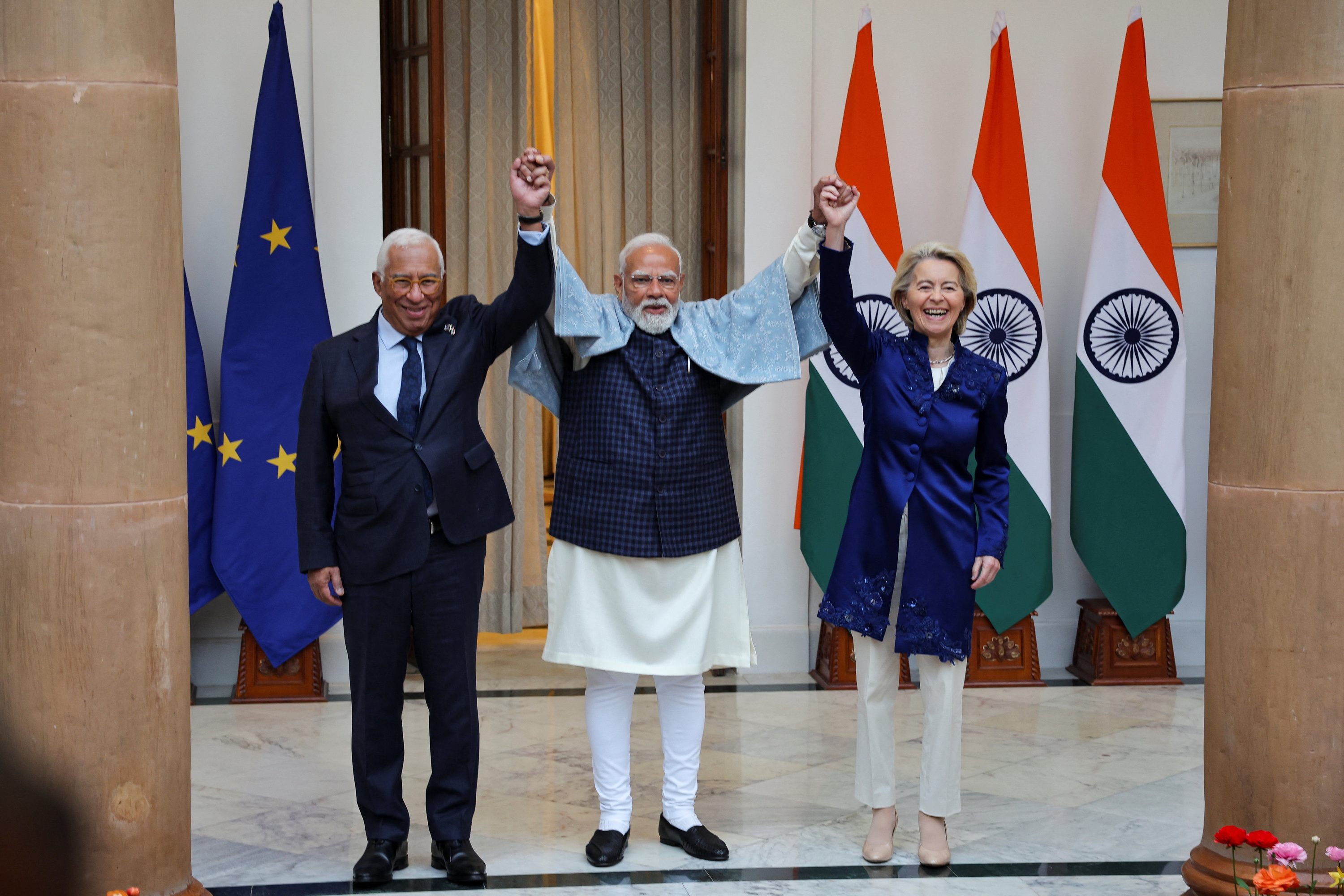
On January 27, 2026, the European Union and India concluded a landmark free trade agreement after more than 20 years of negotiations, marking a significant milestone in international trade relations. The agreement was signed in New Delhi by key leaders including European Council President Antonio Costa, European Commission President Ursula von der Leyen, and Indian Prime Minister Narendra Modi, who described the pact as "the agreement of all agreements."
This comprehensive deal covers approximately 25% of the global GDP and one-third of global trade, creating a free trade zone for around 2 billion people. It aims to strengthen economic ties while providing a strategic defense against Chinese competition and the ongoing U.S. tariff wars. Ursula von der Leyen highlighted that the EU stands to save up to 4 billion euros annually and gain unprecedented access to India’s traditionally protected market.
Economically, the agreement reduces customs duties across many sectors, benefiting industries such as automotive, spirits, textiles, and pharmaceuticals. Significant tariff cuts include lowering Indian duties on European cars from 110% to 10% and on wines from 150% to 20%, while India is expected to expand its exports of textiles and pharmaceuticals to the EU. Trade between the two regions has already increased substantially, with bilateral trade reaching €120 billion in goods and €60 billion in services in 2024—a nearly 90% growth over ten years.
India, with a population of 1.5 billion and an 8.2% annual economic growth rate in the last quarter, is projected by the IMF to become the world’s fourth-largest economy this year, surpassing Japan. The EU views India as a crucial source of technology and investment for modernization and job creation.
Beyond trade, the accord includes agreements on seasonal worker movements, student and professional exchanges, as well as security and defense collaborations, underscoring a broader strategic partnership between India and the EU in a complex global landscape.
This historic agreement promises substantial economic opportunities for over two billion people, symbolizing a new era of cooperation and mutual growth between two of the world’s largest economic blocs.
Source articles (4)
-
lefigaro.fr Jan 27, 2026
Ursula von der Leyen et Antonio Costa sont arrivés en Inde pour y signer un accord commercial historique
-
lemonde.fr Jan 27, 2026
L’Inde et l’UE concluent un accord de libre-échange qui réduit les droits de douane dans de nombreux secteurs
-
liberation.fr Jan 27, 2026
Commerce : l’Inde et l’UE concluent «l’accord de tous les accords»
-
Automobile, pâtes, vin... L'Inde et l'UE concluent ce mardi un accord de libre-échange commercial