French Farmers' Union Coordination Rurale Launches Nationwide Protests Against Government Policies and EU-Mercosur Deal
Coordination Rurale farmers launch nationwide protests, including fuel depot blockades and Paris demonstrations, opposing French agricultural policies and the EU-Mercosur trade deal.
Key details
- Coordination Rurale blocked Bassens oil depot to disrupt fuel traffic and pressure the government.
- Protests oppose systematic culling of cattle due to nodular dermatitis and the EU-Mercosur trade agreement.
- Farmers voiced slogans condemning European regulations and French policies in Paris demonstrations.
- Negotiations with authorities are planned following coordinated peaceful protests.
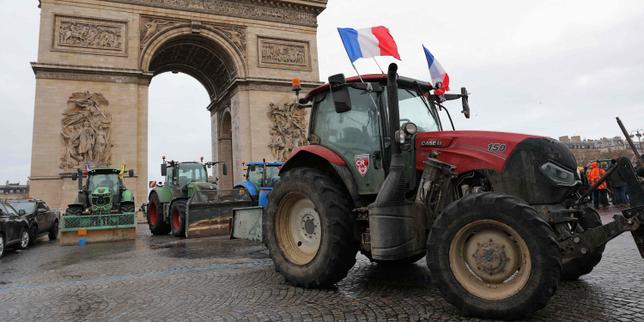
On January 8, 2026, the Coordination Rurale (CR), France's second-largest agricultural union, spearheaded widespread protests opposing French government agricultural policies and the upcoming EU-Mercosur free trade agreement. The demonstrations, characterized by peaceful but impactful blockades and public rallies, highlighted farmers' deep dissatisfaction with official measures on livestock disease control and international trade.
A centerpiece of the protest was the blockade of the Bassens oil depot "Docks des pétroles d’Ambès" in Gironde, a vital facility responsible for 5% of France's fuel distribution. Farmers from multiple departments, including Landes, Pyrénées Atlantiques, Lot-et-Garonne, and Gironde, gathered despite local bans on tractor convoys. Their aim was to disrupt fuel traffic to exert financial pressure on the government, particularly over handling of the nodular dermatitis epidemic. Coordination Rurale co-president Fabrice Lagueyt explained, "We are here to paralyze fuel traffic, hoping to impact the state financially and prompt a reaction," emphasizing the peaceful nature of the protest and the necessity of government attention.
Simultaneously in Paris, CR members demonstrated against the EU-Mercosur trade agreement and criticized European regulations they argue harm French farmers. Protesters bore placards with slogans like "Foutez-nous la paix, laissez-nous travailler" (Leave us alone, let us work) and "servir et ne pas se servir" (Serve and not to serve), highlighting grievances around the systematic culling of cattle due to nodular dermatitis and broader agricultural policies perceived as unsupportive. The union, often overshadowed by the dominant FNSEA, is known for its direct-action approach.
The protests reflect farmers' calls for greater consideration in policy decisions affecting their livelihoods, especially as the Mercosur deal awaits a European Union member states' vote. Negotiations between the Coordination Rurale and local authorities were anticipated following the blockades, with the union planning additional actions regionally.
These events underscore ongoing tensions in France's agricultural sector, balancing disease management, protectionism, and international trade pressures.
Source articles (3)
-
lefigaro.fr Jan 8, 2026
Colère des agriculteurs : qu’est-ce que la Coordination rurale, ce syndicat adepte des actions coup de poing qui veut renverser la table ?
-
lemonde.fr Jan 8, 2026
EN DIRECT, colère des agriculteurs : des manifestants reçus par la présidente de l’Assemblée nationale, Yaël Braun-Pivet
-
Les agriculteurs de la Coordination rurale prêts à rester à Paris «tant qu’il le faudra»
Source comparison
Protest location
Sources disagree on the location of the protest by the Coordination Rurale.
lefigaro.fr
"The Coordination rurale organized a significant protest in Paris."
lemonde.fr
"Farmers from the Coordination Rurale (CR) blocked the oil depot 'Docks des pétroles d’Ambès' in Bassens, Gironde."
Why this matters: One source states the protest took place in Paris, while another indicates it was at an oil depot in Bassens, Gironde. This discrepancy is significant as it changes the context and scale of the protest.