French Government Launches Inspections to Prevent Abusive Fuel Price Hikes Amid Middle East Conflict
France launches unprecedented gas station inspections to prevent unjustified fuel price hikes amid the Middle East crisis and rising oil costs.
Key details
- French government conducts 500 exceptional gas station inspections from March 8 to 10 to prevent abusive price hikes.
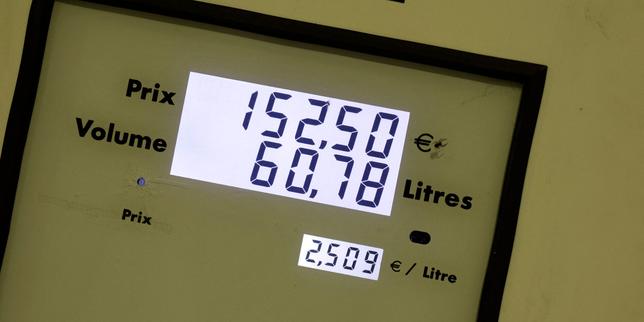
- Fuel prices have surged significantly, with diesel up 26 cents (15%) and SP95-E10 up 10 cents since late February.
- Prime Minister Lecornu stated that the Middle East conflict cannot justify abusive fuel price increases.
- Minister Roland Lescure warned of public naming of any offenders engaged in price gouging.
- Political calls for tax cuts on fuel face government resistance due to budget concerns, while G7 discussions consider strategic oil reserve use.
In response to significant fuel price increases linked to the ongoing Middle East conflict and the blockade of the Strait of Hormuz, the French government has initiated exceptional measures to contain abusive price hikes at the pump. Starting March 8, 2026, 500 targeted inspections were carried out across gas stations from March 8 to 10, a volume equivalent to half a year's usual controls, to detect and deter unlawful price gouging.
Prime Minister Sébastien Lecornu emphasized that "the war in the Middle East cannot serve as an excuse for abusive price hikes," underscoring the government's commitment to consumer protection despite external energy shocks. Fuel prices have surged sharply since late February, with SP95-E10 gasoline prices rising by 10 cents and diesel increasing by 26 cents per liter, a 15% jump that has intensified public concern.
Economy Minister Roland Lescure warned that any gas station operators found exploiting the situation would be publicly named and shamed, demonstrating a zero-tolerance stance against profiteering amid the crisis. Meanwhile, political voices such as Marine Le Pen from Rassemblement National and La France insoumise have called for fuel tax reductions as a relief measure, but the government maintains its position against lowering the VAT or excise duties, citing the risk of creating a nearly €20 billion budget shortfall.
The energy price surge is partly driven by geopolitical tensions, as the Middle East conflict has led to historic oil price spikes, exacerbated by the blockade of the strategic Strait of Hormuz. French authorities and G7 finance ministers are considering all possible scenarios, including the potential release of strategic oil reserves, to stabilize the markets.
Although further government subsidies or price freezes remain under consideration, the current approach prioritizes rigorous monitoring and enforcement to prevent unjustified fuel price surges, balancing economic and fiscal responsibilities with the need to shield consumers from exploitation during this volatile period.
Source articles (3)
-
lemonde.fr Mar 9, 2026
Prix du carburant : le pétrole s’envole, mais il est « trop tôt » pour envisager des aides à la pompe, selon le gouvernement
-
liberation.fr Mar 9, 2026
Choc énergétique : que peut faire le gouvernement pour contenir les prix à la pompe ?
-
Carburants : le « plan » du gouvernement pour éviter des « hausses abusives des prix à la pompe » commence ce lundi