Left-Wing Alliances and Local Strategies Shape 2026 Municipal Elections in France
As the 2026 municipal elections approach, left-wing parties in France, especially LFI, face complex alliance decisions amid local disagreements and right-wing challenges.
Key details
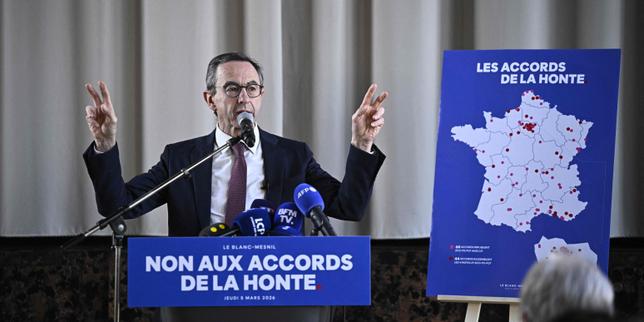
- Bruno Retailleau denounces 112 communes with left-wing alliances involving LFI.
- Socialist Party dismisses these accusations as diversion from right-wing-far-right local alliances.
- Nantes is a focal point where the Socialist Party aims to avoid a three-way runoff to prevent right-wing victory.
- Marine Tondelier stresses local decision-making for alliances, supporting Lyon’s mayor Grégory Doucet amid challenging polls.
- LFI positions itself as influential in second-round negotiations despite tensions and controversies.
- Nearly 888,000 candidates compete nationally on March 15, highlighting the elections’ scale and complexity.
As the first round of the 2026 French municipal elections approaches on March 15, left-wing parties are navigating complex local alliances and strategic decisions to bolster their positions against right-wing and far-right contenders. La France Insoumise (LFI), in particular, is emerging as a pivotal player in many communes, sparking debates and some intraleft tension.
Bruno Retailleau, president of the conservative Les Républicains, has condemned what he calls “les accords de la honte” (the shameful agreements) between LFI and other left-wing parties, highlighting 112 communes where such alliances exist. However, the Socialist Party views this accusation as a diversionary tactic aiming to shift the spotlight away from right-wing and far-right local coalitions also forming in some areas.
In Nantes, where dissatisfaction with Mayor Johanna Rolland's administration is palpable among residents compelled by concerns over security and city management, the Socialist Party’s number two in Loire-Atlantique is focusing on avoiding a three-way runoff that could allow the right to seize control. A strong result in the first round could help consolidate the left’s chances there. Meanwhile, LFI is positioning itself as a key force for the second round, shaping critical local negotiations.
In Lyon, ecology party leader Marine Tondelier emphasized that municipal campaign decisions, including potential alliances with LFI, will be made locally "case by case." She voiced support for incumbent mayor Grégory Doucet, who, despite polling at around 30%, is trailing Jean-Michel Aulas, who hovers between 42% and 47%. Tondelier described Doucet’s campaign as resilient and criticized Aulas for his divisive messaging. The electoral atmosphere in Lyon remains tense, especially following the tragic death of activist Quentin Deranque and ensuing accusations of anti-Semitism directed at LFI leader Jean-Luc Mélenchon.
The municipal elections will feature nearly 888,000 candidates nationwide. Regional debates, such as the one in Lyon on public safety and political alliances, underscore the fractured yet dynamic landscape within the French left. As local strategies take shape, the question remains how these evolving partnerships and rivalries will influence the broader electoral outcome in March.
Source articles (4)
-
lefigaro.fr Mar 6, 2026
Municipales 2026 : Marine Tondelier évoque des alliances avec LFI au second tour «au cas par cas»
-
liberation.fr Mar 6, 2026
Municipales 2026 : fusion ou non avec LFI, Nantes un cas d’école pour Johanna Rolland et le PS
-
Municipales à Nantes : La France insoumise se voit déjà incontournable pour le second tour
-
lemonde.fr Mar 6, 2026
Municipales 2026 : Bruno Retailleau dénonce « les accords de la honte » entre LFI et les autres partis de gauche