Left-Wing Security Policies Evolve in 2026 French Local Elections Amid Rising Urban Crime Concerns
Left-wing politicians in France's 2026 local elections adjust security policies amid rising urban crime, with varying approaches on police armament and surveillance across key cities.
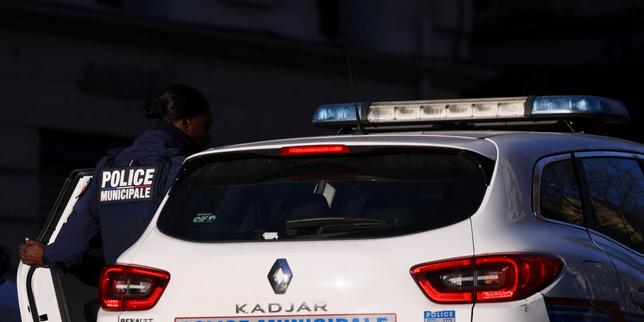
Key details
- Grenoble faces drug-related shootings, prompting local police creation without lethal arms.
- Anne Hidalgo shifted to support municipal police in Paris, implemented since 2021.
- Brest plans to establish municipal police if current mayor re-elected.
- Bordeaux's mayor armed some municipal police and increased surveillance cameras.
As the March 2026 municipal elections approach in France, left-wing politicians are notably shifting their stances on local security policies in response to increasing urban safety challenges. This evolution is evident in several key cities including Grenoble, Paris, Brest, and Bordeaux.
Grenoble has faced acute security problems linked to drug-related shootings, underscored by the death of sanitation worker Lilian Dejean in September 2024. Mayor Eric Piolle, a member of the Greens, has urged greater national police presence and formed a local police force targeting sensitive neighborhoods. However, Piolle resists arming municipal agents with lethal weapons, advocating only for non-lethal tools like stun guns and tear gas, and has avoided expanding surveillance camera coverage. His approach contrasts sharply with that of Alain Carignon, a former mayor campaigning to reclaim Grenoble on a strong security platform by emphasizing tighter law enforcement.
Parallel shifts are observed in other French cities. In Paris, Anne Hidalgo reversed her initial opposition to a municipal police force—first expressed in 2013—by championing its creation in 2019, leading to its implementation in 2021. Brest, a city historically without municipal police, is poised to establish one if current mayor François Cuillandre wins re-election, reflecting broader left-wing responsiveness to local security demands.
Bordeaux exemplifies a further step towards security hardening on the left, with Mayor Pierre Hurmic deciding to arm some municipal police officers and double surveillance camera installations. This marks a clear departure from prior caution among leftist officials toward municipal policing tools.
These shifts reveal a widespread recognition within the French left of the need to address security concerns proactively to prevent political exploitation by opponents. Romain Gentil, a candidate from the left-wing Place publique party, stressed the importance of engaging seriously with security issues to avoid ceding ground to demagoguery. The debate over armament and surveillance continues to provoke differing opinions regarding the balance between intervention and community proximity in policing.
With security emerging as a decisive issue in this electoral cycle, left-wing candidates are recalibrating their strategies to reconcile progressive values with pragmatic responses to urban crime challenges.
Source articles (2)
-
lemonde.fr Mar 11, 2026
EN DIRECT, municipales 2026 : « En France, la police est de plus en plus tournée vers l’intervention, au détriment d’une vision davantage ancrée dans la proximité »
-
Municipales : comment la gauche a fait évoluer son positionnement sur la sécurité locale