Macron Leads 107th Armistice Day Commemorations Honoring 'Malgré-Nous' and WWI Legacy
President Emmanuel Macron presides over the 107th Armistice Day in Paris, honoring the 'malgré-nous' and commemorating World War I heroes with a plaque unveiling and traditional ceremonies.
Key details
- Emmanuel Macron unveiled a plaque honoring ‘malgré-nous’ soldiers at Hôtel des Invalides.
- The ceremony included tributes to Georges Clemenceau and the Tomb of the Unknown Soldier.
- An urn with soil from WWI heritage sites was placed on the Tomb for Bleuet de France’s centenary.
- Macron highlighted the importance of teaching the tragedy of ‘malgré-nous’ as part of national history.
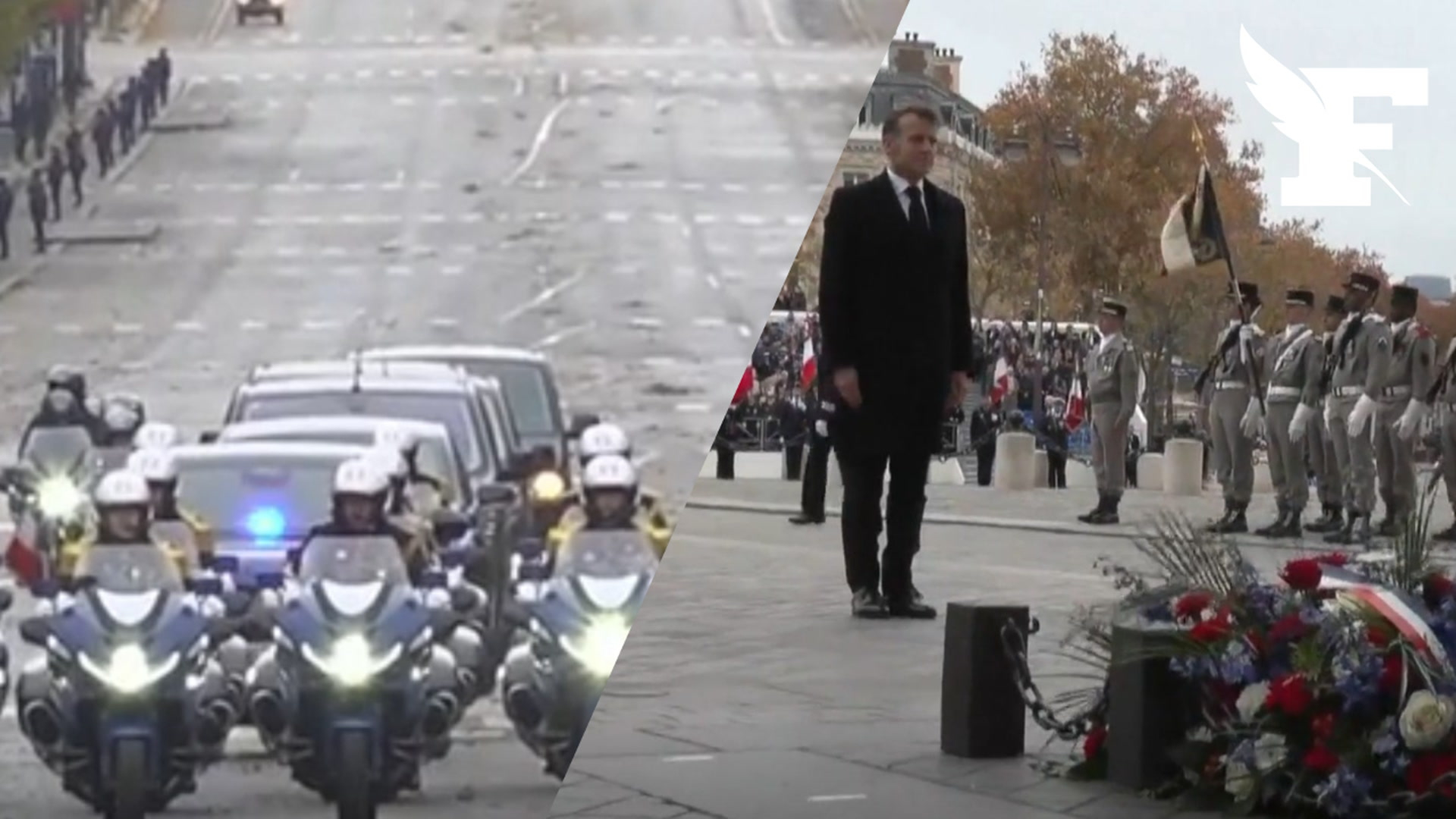
On November 11, 2025, France marked the 107th anniversary of the Armistice of 1918 with solemn ceremonies led by President Emmanuel Macron in Paris. The commemorations paid special tribute to the 'malgré-nous,' the nearly 130,000 men from Alsace and Moselle forcibly conscripted into the German army during World War II.
The official events commenced at the Hôtel des Invalides, where President Macron unveiled a plaque in the memory of the 'malgré-nous' soldiers. The ceremony included laying a wreath and a minute of silence, attended by six surviving members of this group. Over 90,000 of these conscripts returned after the war, while approximately 22,000 were killed in combat and many others were missing or died in detention. Macron emphasized the importance of recognizing and teaching this tragic chapter as part of French national history, underscoring the significance of preserving collective memory.
The tributes continued along the Champs-Élysées, where Macron laid a wreath at the statue of Georges Clemenceau, revered as the 'Père la Victoire' for his leadership during World War I. The ceremony then moved to the Arc de Triomphe, with the rekindling of the flame at the Tomb of the Unknown Soldier, a traditional act symbolizing remembrance of those who fell in combat.
In a notable gesture marking the centenary of the Bleuet de France association, which supports veterans and their families, an urn containing soil collected from 16 of the 139 World War I memorial sites listed as UNESCO World Heritage sites was placed on the tomb, topped with the blue cornflower symbol.
Mayor of Paris Anne Hidalgo also participated in the day’s observances by laying flowers at the memorial earlier in the morning. These acts of remembrance collectively highlighted France's enduring respect for its military history and its commitment to honoring those who sacrificed during the world wars.
Source articles (3)
-
lefigaro.fr Nov 11, 2025
Hommage aux «malgré-nous», centenaire du Bleuet de France... Revivez les temps forts du 11 Novembre en images
-
11 novembre: l’hommage rendu par Emmanuel Macron aux «malgré-nous»
-
lemonde.fr Nov 11, 2025
Les commémorations du 11-Novembre, présidées par Emmanuel Macron, ont commencé
Source comparison
Details of the urn
Sources provide conflicting details about the urn placed on the tomb.
lefigaro.fr
"an urn containing soil from various WWI memorial sites was placed on the tomb."
lemonde.fr
"the urn contained soil from 16 of the 139 UNESCO World Heritage sites related to World War I."
Why this matters: Source 138824 mentions that the urn contained soil from 16 of the 139 UNESCO World Heritage sites related to World War I, while Source 138920 does not specify this detail, which is significant for understanding the symbolic nature of the tribute.