Nationwide Protests Erupt Against Controversial Police Self-Defense Law in France
France sees large-scale protests against a law granting police officers presumed self-defense, sparking social unrest across major cities.
Key details
- Protests held nationwide on November 14 against a law establishing police presumption of self-defense.
- Estimated 106,000 to 200,000 demonstrators participated, with strong turnouts in cities like Paris and Marseille.
- Incidents of violence led to 219 arrests and 10 police injuries, notably in Marseille and Lyon.
- Movement includes diverse groups; organizers foresee larger protests on November 17 backed by major unions.
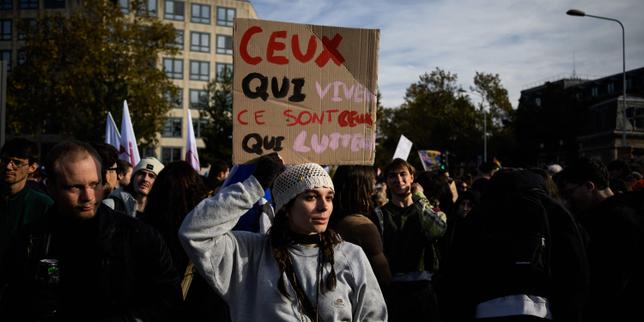
On November 14, 2026, France witnessed widespread protests across multiple cities, including Paris, Lyon, Marseille, Lille, and Bordeaux, against a contentious new law that would grant police officers and gendarmes a presumption of self-defense. This legislation, perceived by many demonstrators as a "license to kill," has ignited significant public outcry and intensified ongoing social movements.
The day's events marked the fifth act of broader social unrest initially sparked by rising living costs, attracting between 106,000 and 200,000 protesters nationwide, according to estimates from the Ministry of the Interior and student unions. Paris alone saw between 24,000 and 100,000 marchers. Despite a slight dip in participation compared to previous demonstrations, the protests retained a strong, determined character, uniting diverse groups including labor unions, student organizations, and the "gilets jaunes" movement.
While many marches proceeded peacefully, tensions escalated in some cities. Marseille and Lyon reported incidents of violence, resulting in 219 arrests and 10 police officers injured. Slogans such as "Macron démission" and "Tout le monde déteste la police" echoed in the streets, underlining widespread discontent not only with the bill but also with law enforcement practices.
Organizers described the protests as heterogeneous but united in their opposition to the law, which they fear could embolden police violence and reduce accountability. The government's refusal to increase public sector salaries has also fueled the unrest. Despite the reduced turnout on November 14 compared to earlier protests, activists remain resolute, anticipating a larger mobilization on November 17, supported by major unions like the CGT and CFDT.
These recent demonstrations underscore ongoing societal tensions in France surrounding police powers, public safety, and social justice, reflecting deep divisions over the direction of governmental policies and citizen rights.
Source articles (2)
-
lemonde.fr Nov 14, 2026
Manifestations du 14 novembre : à Paris comme à Lyon, des cortèges hétéroclites mais déterminés
-
rfi.fr Nov 15, 2026
Mouvement social en France: un «acte V» marqué par une affluence un peu moindre
Source comparison
Nature of the protests
Sources describe the protests as opposing different issues
lemonde.fr
"The protests were primarily against a controversial bill labeled as a 'license to kill' for police officers."
rfi.fr
"The protests were against high living costs and a law perceived as granting police excessive force."
Why this matters: One source emphasizes opposition to a bill perceived as a 'license to kill' for police, while the other focuses on protests against high living costs and police excessive force. This difference in focus affects the reader's understanding of the primary motivations behind the protests.