2025 Marks Third Hottest Year Globally as Climate Change Accelerates
2025 ranks as the third hottest year on record globally, marking a sustained surpassing of the 1.5°C warming threshold and highlighting urgent climate challenges.
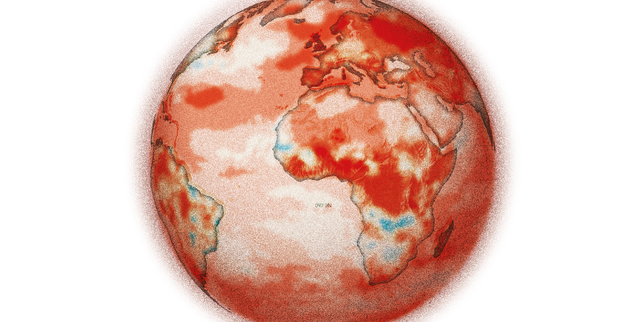
Key details
- 2025 was the third hottest year globally and in Europe, with temperatures 1.47°C above pre-industrial levels.
- The last three years (2023-2025) have sustained temperatures exceeding the 1.5°C Paris Agreement threshold.
- Greenhouse gas emissions, especially from fossil fuels, have driven this rise, exacerbated by stalled climate efforts in wealthy nations including France.
- Scientists predict the 1.5°C threshold could be permanently exceeded by 2030, a decade earlier than expected.
The year 2025 has been recorded as the third hottest year globally and in Europe, further underscoring the alarming acceleration of climate change. According to data from the European Climate Observatory Copernicus and the American institute Berkeley Earth, 2025 temperatures were approximately 1.47°C above pre-industrial levels (1850-1900). This continues a disturbing trend with 2023 and 2024—the hottest year on record—also exceeding the critical 1.5°C global warming threshold set by the Paris Agreement.
Experts emphasize that for the first time, the average global surface temperatures over the past three years have sustained levels beyond this 1.5°C limit, traditionally regarded as the most ambitious goal to avoid dangerous climate impacts. Berkeley Earth scientists highlight an extreme acceleration in global warming between 2023 and 2025, warning that surpassing the 1.5°C threshold is now viewed as an inevitable and permanent state. This scenario poses heightened risks of more intense heatwaves, storms, and environmental disruptions.
The rise in temperatures is primarily driven by record greenhouse gas emissions, especially from fossil fuels such as coal, oil, and gas. Geopolitical tensions have impeded coordinated climate action and weakened natural carbon sinks like forests. Crucially, wealthy countries including France and Germany have seen their emission reduction efforts stall in 2025, while emissions in the United States have increased due to a resurgence in coal usage.
Samantha Burgess, Strategic Climate Leader at the European Centre for Medium-Range Weather Forecasts, pointed out that while the Paris Agreement's temperature limit has not been officially violated yet, the current trajectory makes a permanent overshoot by 2030 likely—about a decade earlier than scientists had predicted in 2015. Mauro Facchini, head of Copernicus, stressed the urgent need for climate action, noting there are no signs suggesting 2026 will reverse these trends.
This sustained and accelerating warming trend presents serious challenges requiring global cooperation and intensified efforts to curb greenhouse gases, especially as previous political and economic setbacks have slowed progress. The official recognition of permanent warming above 1.5°C might occur by the end of this decade, raising the stakes for international climate commitments and environmental policies.
Source articles (2)
-
lemonde.fr Jan 14, 2026
Réchauffement climatique : 2025 dans le trio des années les plus chaudes jamais enregistrées
-
lefigaro.fr Jan 14, 2026
2025 a été la troisième année la plus chaude jamais enregistrée
Source comparison
Temperature increase above pre-industrial levels
Sources differ on the specific temperature increase for 2025 compared to pre-industrial levels.
lemonde.fr
"2025's temperatures were 1.47°C above pre-industrial levels."
lefigaro.fr
"The average global surface temperatures over the last three years have exceeded the preindustrial level by more than 1.5°C."
Why this matters: Source 248985 states that 2025's temperatures were 1.47°C above pre-industrial levels, while Source 248999 suggests that the average global temperatures have exceeded 1.5°C for the last three years. This discrepancy affects the understanding of how close 2025 is to the critical threshold set by the Paris Agreement.