EU-Mercosur Trade Agreement Faces Delays Amid French Agricultural Opposition
The EU-Mercosur trade agreement signing approaches amid French farmer opposition and possible delays due to provisional implementation disputes.
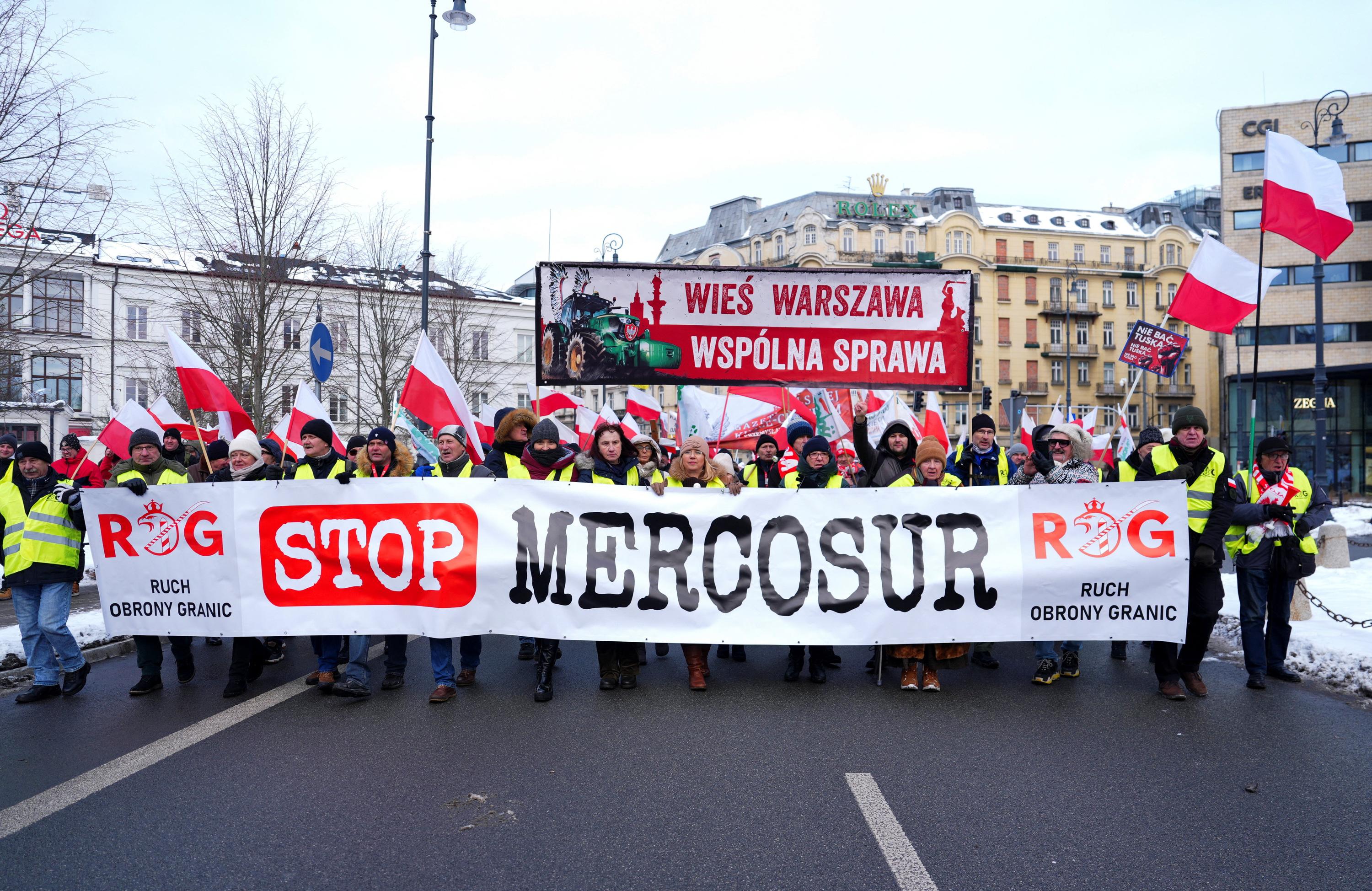
Key details
- The EU plans to sign the EU-Mercosur trade agreement on January 17 after over 20 years of negotiation.
- France remains a strong opponent but failed to block the agreement in the EU Council due to insufficient support.
- Provisional enforcement of the treaty before European Parliament ratification is possible, confirmed by Agriculture Minister Annie Genevard.
- French farmers protest the agreement, fearing harm to their livelihoods, with notable social tensions including evictions.
- Criticism arose regarding the provisional application clause, seen as undermining democratic procedures.
The EU is set to sign a long-awaited trade agreement with the Mercosur bloc on January 17, ending over 20 years of negotiations. However, the implementation of the EU-Mercosur free trade treaty could be delayed by several months due to significant opposition from French farmers and political tension within the EU. Despite France's strong objections, it failed to rally enough support from other EU countries to block the agreement, which requires a coalition representing more than one-third of the EU’s population.
The Council of the EU has authorized the European Commission to proceed with signing the deal, but controversy surrounds a clause that permits the treaty's provisional enforcement before the European Parliament formally ratifies it. Agriculture Minister Annie Genevard confirmed this provisional application could commence as early as Saturday, raising alarm among French agricultural representatives. Euro-deputy Céline Imart criticized this move as a “pure denial of democracy” and a “serious fault,” highlighting the contentious nature of the agreement's potential early implementation.
In France, the treaty has sparked widespread unrest among farmers fearing the deal will undermine their livelihoods. Recent events have underscored this tension: renowned chef Philippe Etchebest expressed outrage over the eviction of protesting farmers in Bordeaux, describing the situation as “irrational.” The agricultural community has been mobilizing extensively against the EU-Mercosur agreement, concerned that increased imports from South America will adversely affect French agriculture.
The EU-Mercosur bloc consists of Argentina, Brazil, Paraguay, and Uruguay, and the agreement aims to increase trade by reducing tariffs and barriers. Yet for France, which plays a pivotal role in the EU negotiations, the balance between broader trade benefits and protecting national farmers remains a critical and unresolved challenge. As the provisional enforcement looms, the debate over the treaty’s democratic legitimacy and its socioeconomic impact continues to intensify.
Currently, the agreement's official ratification by the European Parliament is still pending, leaving its fully binding application uncertain. The ongoing opposition from France exemplifies the complexities involved in finalizing such a large international trade deal amid divergent domestic interests within the EU.
Source articles (2)
-
lefigaro.fr Jan 12, 2026
Mercosur : pourquoi l’application du traité de libre-échange pourrait être retardée de plusieurs mois
-
leparisien.fr Jan 12, 2026
Société : Toute l'actualité Société