France Launches Food Sovereignty Strategy Amid Growing Agricultural Challenges
Minister Annie Genevard unveils a ten-year plan to tackle France's food sovereignty challenges amid global crises and import dependency.
Key details
- Annie Genevard launches 'conferences of food sovereignty' to define a 10-year agricultural plan.
- France heavily relies on imports for fruits, vegetables, meat, and honey despite favorable conditions.
- Global conflicts, especially the Ukraine war, disrupt agricultural supply chains.
- FNSEA criticizes the initiative as a communication operation rather than a concrete solution.
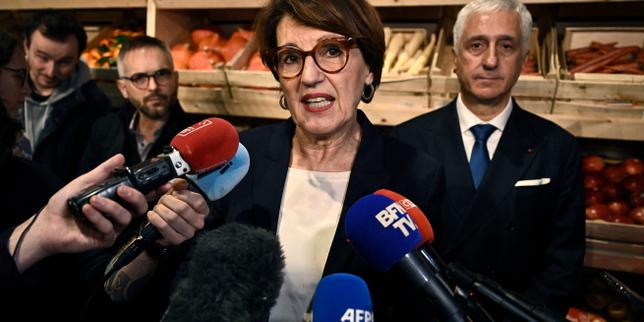
On December 8, 2025, French Agriculture Minister Annie Genevard announced the launch of a comprehensive ten-year strategy to reinforce France’s food sovereignty, warning of an impending 'agricultural war' influenced by global crises. Speaking at the wholesale market in Rungis, Genevard highlighted the urgency created by conflicts such as the war in Ukraine, which has disrupted grain exports due to the Black Sea blockade and targeted bombings of Ukrainian grain silos. She emphasized that France currently faces a critical dependence on imports—over half of its fruits and vegetables, 60% of its honey, 25% of its beef, and a significant portion of sheep meat are sourced from abroad despite the country's favorable agricultural conditions.
The newly established 'conferences of food sovereignty,' mandated by the agricultural orientation law of March 2025, will convene over several months to define strategic actions at both sectoral and regional levels. Conclusions are expected by June 2026. Minister Genevard stressed several challenges facing French agriculture, including a declining and aging workforce, climate change, volatile pricing, and shifting consumer behavior, noting that the share of food expenditure in French households has decreased from 35% in 1960 to under 20% today.
While the initiative aims to develop production and transformation plans aligned with consumer demand and climate goals, the National Federation of Agricultural Unions (FNSEA) criticized it as a mere communication exercise rather than a practical solution. The agricultural community is grappling with crises including livestock health issues and persistently low prices, making some call for more immediate interventions rather than prolonged consultations.
Genevard called for a 'great food awakening,' underscoring France’s potential to boost domestic production given its fertile land and climate. She warned that if international conflicts escalate, French farmers would be central to ensuring national food security.
This strategic push highlights France’s proactive stance on maintaining agricultural stability in the face of global geopolitical and environmental pressures, aiming to reduce import dependency and strengthen sovereignty over food production in the years ahead.
Source articles (3)
-
lefigaro.fr Dec 8, 2025
Souveraineté alimentaire : «La guerre agricole se prépare», alerte la ministre Annie Genevard
-
lemonde.fr Dec 8, 2025
Souveraineté alimentaire : « la guerre agricole se prépare », affirme la ministre Annie Genevard
-
«Si la guerre éclate, c’est sur nos agriculteurs qu’il faudra compter», avertit Annie Genevard depuis Rungis
Source comparison
Launch of food sovereignty conferences
Sources disagree on the nature of the event; one describes it as the unveiling of a strategy, while another states it was the inauguration of conferences.
lefigaro.fr
"Annie Genevard unveiled a ten-year national agricultural strategy."
lemonde.fr
"Minister of Agriculture Annie Genevard announced the launch of the 'conferences of food sovereignty'."
Why this matters: One source claims Annie Genevard unveiled a ten-year agricultural strategy, while another states she inaugurated the 'conferences of food sovereignty'. This difference affects the understanding of the event's purpose and significance.