France Opposes EU-Mercosur Trade Deal as EU Commission Pushes for December Agreement Amid Farmer Protests
France opposes the EU-Mercosur trade agreement due to farmer concerns as the European Commission pushes for a December signing amid protests and calls for political clarity.
Key details
- European Commission plans to sign EU-Mercosur agreement on December 15 despite French opposition.
- France demands delay and stronger protections for French farmers, questioning current deal terms.
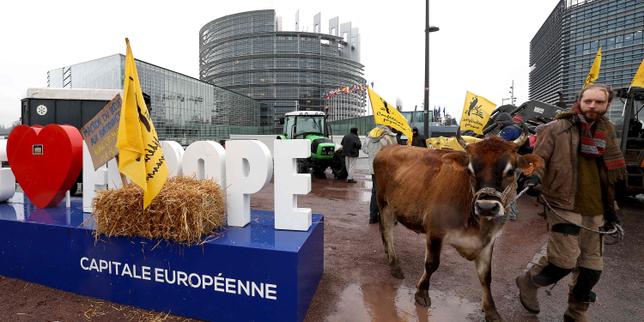
- Up to 10,000 agricultural union protesters expected in Brussels to oppose the deal.
- Political pressure mounts on Macron to clarify his stance amid EU internal divisions.
The European Commission is determined to sign the controversial EU-Mercosur trade agreement by December 15, 2025, despite strong opposition from France. Commission President Ursula von der Leyen aims to finalize the deal during the Mercosur summit in Brazil, but approval from all EU member states—including France—is required in Brussels beforehand.
France has firmly resisted the agreement, citing concerns over insufficient protections for its farmers. President Emmanuel Macron has called for a delay in the agreement’s examination until 2026, arguing that French demands have yet to be met. This position contrasts with other key EU nations such as Germany, Spain, and Scandinavian countries that support the deal to boost exports in the face of economic challenges posed by Chinese competition and U.S. tariffs.
The controversy has sparked significant unrest among agricultural unions, with up to 10,000 protesters expected in Brussels to voice their opposition to increased imports of South American agricultural products including meat, sugar, rice, honey, and soy. These products are at the center of French farmers’ concerns, who fear the agreement would jeopardize their livelihoods.
Adding to internal tensions, Bruno Retailleau, president of the French Republicans, has publicly called on Macron to clarify his stance, criticising the president’s seemingly inconsistent statements made internationally. Retailleau questioned the rationale behind Macron’s request for a delay, suggesting that if France’s objections were strong, there would be no need to postpone the vote.
The EU Commission and its supporters emphasize the importance of securing the agreement swiftly, with Germany urging action this week. Meanwhile, the European Parliament is expected to discuss safeguard measures designed to protect EU farmers, such as stricter import controls and enhanced monitoring of sensitive products to ensure compliance with European standards.
The dispute underscores sharp divisions within the EU over trade policy and the balance between economic opportunity and agricultural protectionism. As the December 15 deadline approaches, the outcome remains uncertain amid rising political pressure, protests, and diplomatic negotiations.
Source articles (2)


Source comparison
Products involved in trade agreement
Sources differ on the specific products exchanged in the trade agreement.
lemonde.fr
"The agreement would facilitate increased imports of South American agricultural products like meat and sugar into Europe."
lefigaro.fr
"The deal would increase European exports of cars, machinery, wine, and spirits in exchange for allowing South American products like meat, sugar, rice, honey, and soy into Europe."
Why this matters: Source 1 mentions increased imports of meat and sugar from South America, while Source 2 lists meat, sugar, rice, honey, and soy. This discrepancy affects understanding of the agreement's implications for European farmers.