French Deputies Reject Revenue Proposals in Heated 2027 Budget Debate
French deputies in commission rejected the revenue section of the 2027 budget, sparking heated debates as the text returns to parliament for broader discussion.
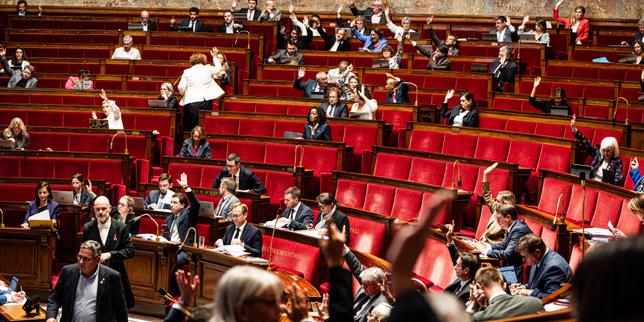
Key details
- Deputies in commission widely rejected the revenue part of the 2027 budget.
- Controversies centered on contributions from retirees and local authorities.
- The original budget draft will be debated in the National Assembly starting Tuesday.
- The rejection reflects broader political and fiscal tensions.
- Economic context shows persistent challenges with business failures, though not directly linked to the budget dispute.
During the commission sessions addressing France's 2027 budget, deputies overwhelmingly rejected the revenue component of the draft, signaling deep political tensions. The debates notably involved contentious discussions about the financial contributions expected from retirees and local authorities. Facilitated by parliamentary scrutiny, deputies are expected to revisit and debate the original budget draft in the National Assembly starting Tuesday, October 13, 2026.
This development underscores the contentious nature of budget negotiations as the government seeks to balance fiscal responsibility amid societal pressures. The original text, which now returns to the floor, reflects the government’s initial strategy before the commission's amendments were proposed and subsequently dismissed by parliamentarians.
These parliamentary debates come at a time of economic uncertainty; although unrelated directly to the budget controversy, recent data from Banque de France highlights that business failures have remained stable but elevated over twelve months, signaling broader economic challenges.
The rejection of the "recettes" (revenue) section in commission foreshadows ongoing struggles within parliament to reach a consensus on taxation and funding measures for 2027’s public expenditures. As described by sources close to the debates, the difficulty lies in adequately addressing the needs of various constituencies without excessive fiscal burden, especially retirees and local government entities.
France’s 2027 budget discussions are thus shaping up to be a critical political battleground with significant implications for national policy and economic stability moving forward.