French Farmers Intensify Protests Amid Rising Tensions and Government Crackdown
French agricultural protests escalate with tractor convoys pressing towards Paris and blockades near Toulouse amid government bans and police interventions.
Key details
- Approximately 100 tractors from Coordination rurale mobilized to protest in Paris on January 7, 2026, despite official bans.
- Police blocked convoys with some farmers breaching barricades, leading to arrests and detentions.
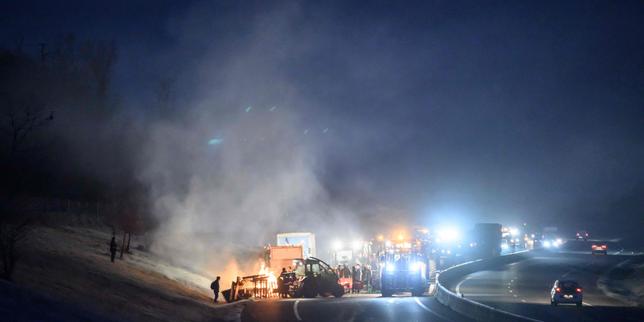
- In Toulouse and Occitanie, blockades targeted tolls and highways, facing a strong police and CRS presence.
- A government crisis cell was activated, with Interior Minister Laurent Nuñez informed of ongoing tensions.
On January 7, 2026, French farmers escalated their protests across multiple regions, notably targeting Paris and Toulouse, to voice grievances against government policies and economic pressures impacting agriculture.
A convoy of around one hundred tractors led by the Coordination rurale (CR) attempted to reach Paris despite bans on demonstrations and adverse weather. Their demands centered on issues such as the outbreak of bovine dermatose, soaring wheat prices, and competition from Mercosur countries. Farmers faced police barricades in Yvelines, with some forcing passage and resulting in minor collisions and arrests of three individuals. By 4 p.m., over 100 tractors gathered near Paris, with authorities maintaining restrictions. The government responded by activating an interministerial crisis cell, with Interior Minister Laurent Nuñez monitoring the situation closely. Meanwhile, protests in the South-West continued, with farmers erecting barricades despite freezing temperatures and official prohibitions, leading to 16 detentions for traffic obstruction, all later released.
Simultaneously, protests near Toulouse focused on blocking major toll roads and national routes. Following a regional prefect’s unprecedented ban on demonstrations and tractor circulation since December 2025, farmers faced a heavy police presence including gendarmes and CRS units. Highways A63, A68, A61, and A64 were blocked from early morning hours, hindering traffic. Restrictions aimed to prevent disturbances, applying across the Occitanie region and Haute-Garonne.
The agricultural unions expressed frustration with the government’s crisis management. Bertrand Venteau of the CR highlighted the peaceful intentions of protesters, while the Haute-Garonne inter-union deemed the situation "unacceptable." Meanwhile, FNSEA chief Arnaud Rousseau reaffirmed concerns about the EU-Mercosur trade agreement's impact on French farmers. The government announced intentions to suspend a carbon tax on fertilizers to ease burdens, although this claim was not confirmed by the European Commission.
These protests reflect mounting agricultural sector unrest as farmers seek concrete government action amid economic and regulatory challenges.