French Government Convenes Crisis Talks Amid Escalating Farmer Protests Over Contagious Nodular Dermatitis
France faces widespread agricultural protests and major highway blockades over the handling of contagious nodular dermatitis in cattle, prompting government crisis talks and a vaccination expansion plan.
Key details
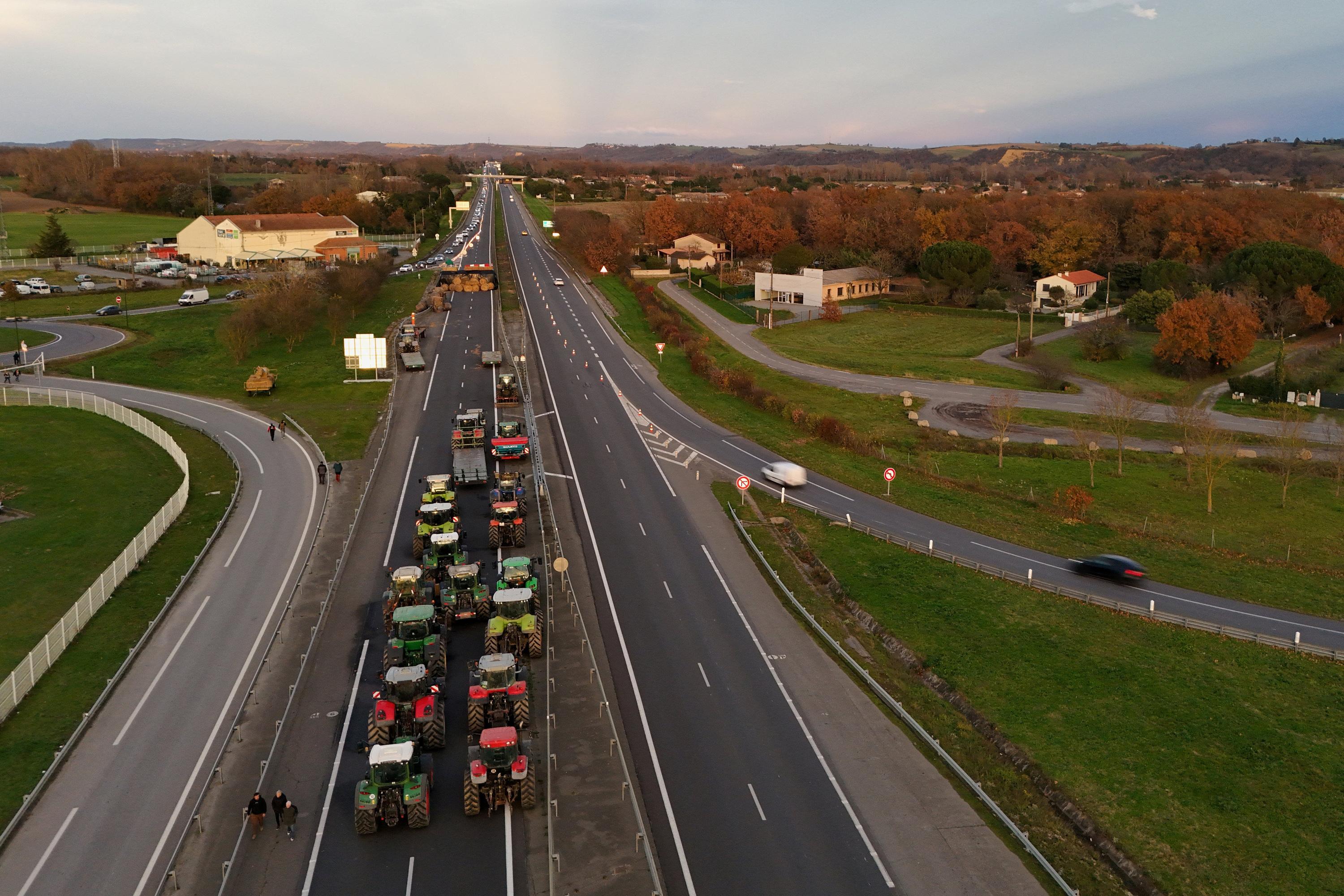
- Farmers have blocked multiple major highways, including a 180 km closure of the A64 in southwestern France.
- Prime Minister Sébastien Lecornu convened a crisis meeting with ministers and prefects on December 16 to address the agricultural unrest.
- Agriculture Minister Annie Genevard announced plans to vaccinate 600,000 to 1 million cattle as part of the revised policy.
- Farmers demand an end to systematic culling of infected animals and express dissatisfaction with government measures.
- A scientific dialogue cell will be created to involve experts and representatives in resolving the epidemic management.
Farmers across France are intensifying protests over the government's handling of the contagious nodular dermatitis (DNC) epidemic affecting cattle, resulting in multiple major highway blockades and causing transportation chaos. On December 16, 2025, the unrest continued with at least five autoroutes blocked in key southwestern regions, including a 180-kilometer closure of the A64 highway between Briscous and Montréjeau. Additional disruptions occurred on the A9, A54, A75, A89, and A65 highways, as well as in Île-de-France on the RN12. These blockades, organized by farmer groups such as the "Ultras de l’A64," have paralyzed traffic and sparked concern over economic and social impacts.
Amid the escalating crisis, Prime Minister Sébastien Lecornu scheduled a high-level meeting at Matignon to address the agricultural sector’s grievances. The meeting, held on December 16, brought together key ministers including Agriculture Minister Annie Genevard, Interior Minister Laurent Nuñez, Justice Minister Gérald Darmanin, and prefects from affected departments like Ariège, Aude, and Haute-Garonne. The agenda focused on the epidemic’s management, the ongoing farmer protests, and the opposition to the EU-Mercosur trade agreement.
During a crisis meeting in Toulouse preceding the Matignon summit, Minister Genevard acknowledged the distress faced by farmers and announced a new vaccination plan targeting between 600,000 and 1 million cattle — a significant expansion from previous efforts. She emphasized this plan as a first step in modifying the current protocol, which includes systematic culling of infected animals, vaccination campaigns, and movement restrictions. However, farmer representatives, including Guillaume Bénazet from the Young Farmers' Union and Jonathan Kirchner of the Peasant Confederation, voiced dissatisfaction, demanding an end to systematic culling and a greater role for vaccination.
Genevard also revealed plans to create a scientific dialogue cell involving experts and industry stakeholders to better navigate the crisis. Despite a recent new case reported in Aude, officials maintain that the situation remains under control. Concurrently, farmers continue to oppose the Mercosur trade deal, with President Emmanuel Macron seeking to delay the European vote to protect domestic agriculture, though this request has been rejected by the European Commission.
The agricultural crisis highlights tensions between rural sectors and the government, with critical infrastructure disruptions ongoing and negotiations underway to address farmers' demands and health concerns related to the DNC outbreak.
Source articles (5)
-
lefigaro.fr Dec 16, 2025
Colère agricole : Sébastien Lecornu convoque une réunion ce mardi à Matignon
-
EN DIRECT - Colère agricole : au moins cinq autoroutes bloquées, des trains à l’arrêt entre Toulouse et Narbonne
-
Dermatose : la mobilisation se poursuit ce mardi au lendemain de la visite d’Annie Genevard en Occitanie
-
lemonde.fr Dec 16, 2025
Sébastien Lecornu organise une réunion à Matignon pour tenter d’apaiser la colère du monde agricole
-
JO 2030 : la loi olympique, indispensable aux Jeux dans les Alpes françaises, examinée par les députés
Source comparison
Date of protests
Sources disagree on when the protests began.
lemonde.fr
"On December 13, 2025, farmers blocked the A64 highway near Carbonne in Haute-Garonne to protest the government's management of contagious nodular dermatitis (DNC) affecting livestock."
lefigaro.fr
"The 'Ultras de l’A64', a group of farmers, are continuing their protests in Carbonne, Haute-Garonne, following previous demonstrations during the agricultural crisis in winter 2024."
Why this matters: One source states that the protests began on December 13, 2025, while another source mentions ongoing protests without specifying a start date. This discrepancy affects the timeline of events leading to the meeting.