French Government Faces Budgetary Challenges as 2026 Social Security Deficit Projected at €19.5 Billion
France projects a €19.5 billion Social Security deficit for 2026 amid difficult budget negotiations, with state budget approval possibly extending into January.
Key details
- Social Security deficit for 2026 estimated at €19.5 billion after budget adoption.
- Government injecting €4.5 billion to Social Security funds to reduce shortfall.
- Tough negotiations on 2026 state budget may extend approval into January.
- Rejection of savings measures hampers government deficit targets.
- Parliament must pass special law for state continuity if budget approval is delayed.
The French government is grappling with significant budget challenges for 2026, marked by difficulties in passing both the Social Security and state budgets amid projected deficits and political tensions. Following the adoption of the Social Security financing bill on December 10, the deficit for the Social Security system is now estimated at €19.5 billion for 2026, reduced from a feared €30 billion. The state is expected to inject €4.5 billion into Social Security funds to avoid a larger shortfall of €24 billion. Despite these efforts, the government still struggles to achieve its target deficit of €17.5 billion, a goal complicated by the rejection of key savings measures such as freezing pensions and social benefits, which could have saved €3.6 billion.
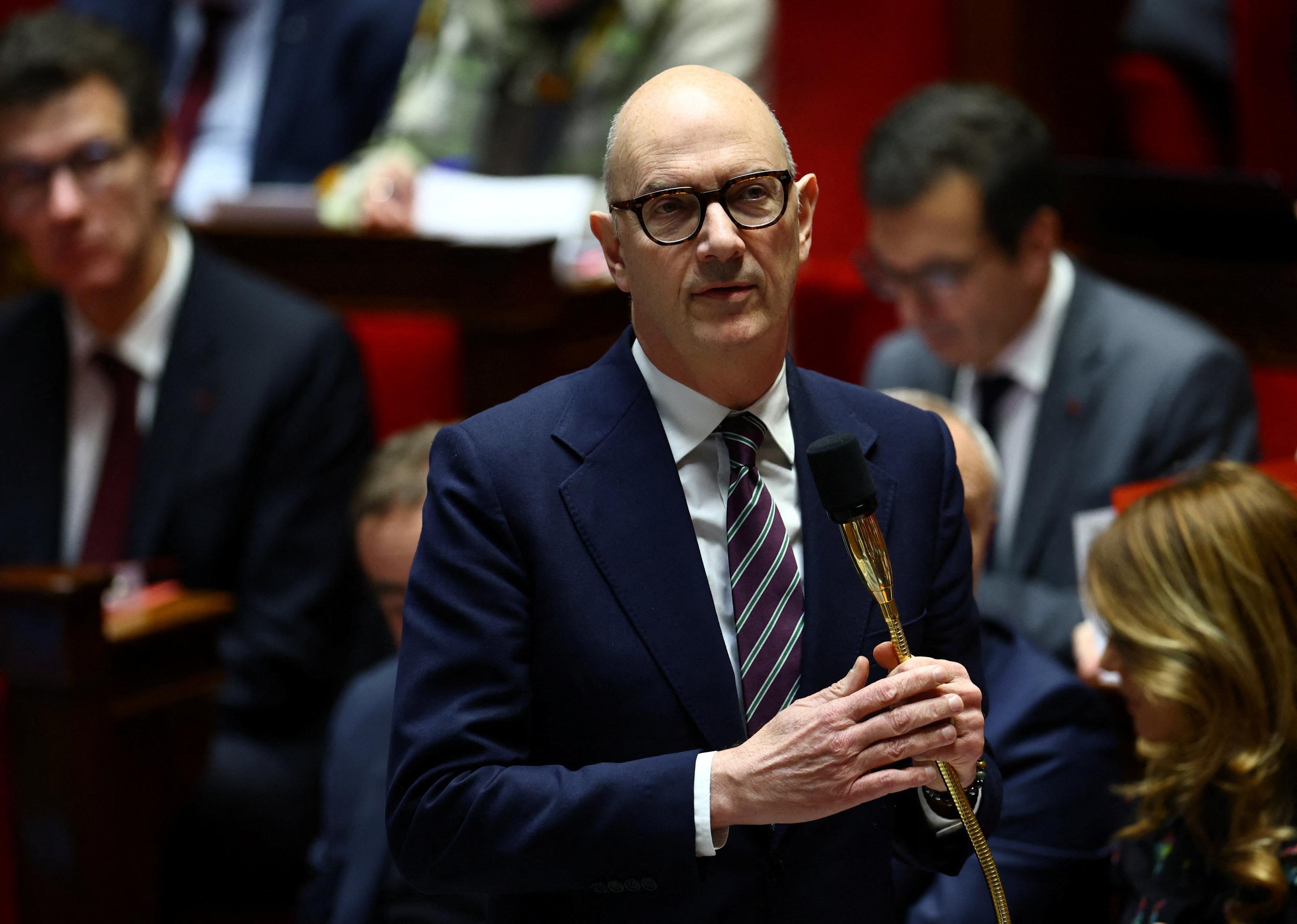
Economic Minister Roland Lescure described the budget approval process as fraught with difficulty, using a sports metaphor to illustrate the increasing challenge, noting that the "final hurdle is now set at 1.30 meters." He acknowledged that while the adoption was a relief, the budget remains "not ideal." The government remains committed to keeping the combined deficit of the Social Security and state budgets below 5% of GDP.
Meanwhile, the 2026 state budget faces even tougher negotiations, with no expectation for a vote by year-end. Government spokesperson Maud Bregeon confirmed that discussions between the National Assembly and Senate are ongoing, with a mixed parliamentary commission scheduled for December 19. If no consensus arises, talks may extend into January. To guarantee state operational continuity, Parliament must pass a "special law" by the end of December to ensure continued tax collection and expenditure freezes, akin to measures employed in 2024 after political upheaval.
Prime Minister Sébastien Lecornu expressed cautious optimism about passing the budget before year-end, proposing a series of debates and votes on defense, anti-drug trafficking, agriculture, energy, and deficit issues. However, opposition voices such as Olivier Faure remain skeptical, stating, "I am simply saying that for now, the evidence is that we will not succeed within the timeframes set."
This complex budget environment underscores the French government’s delicate balancing act amid competing fiscal demands and political divides as it seeks to maintain economic stability in 2026.
Source articles (2)
-
lefigaro.fr Dec 10, 2025
Budget : à combien s’élèvera le déficit de la Sécurité sociale en 2026, après le vote du texte mardi ?
-
liberation.fr Dec 10, 2025
Budget de l’Etat : le gouvernement ouvre la porte à une prolongation des discussions en janvier