Macron Faces Fierce Backlash Over Social Media Regulation and Media Labelling Plans
President Macron’s plans to regulate social media and label media outlets have ignited strong opposition from right-wing politicians and media groups who accuse him of censorship and authoritarianism.
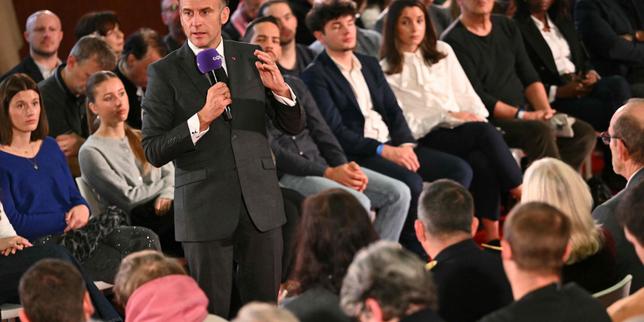
Key details
- Macron proposes judicial measures and a labelling system to combat misinformation on social media and media outlets.
- Right-wing politicians, led by Bruno Retailleau, strongly oppose these plans, calling them censorship and a threat to media freedom.
- Media groups linked to Vincent Bolloré accuse Macron of authoritarianism and totalitarian tendencies.
- The Élysée defends Macron's initiatives as necessary to protect democracy and improve trust in information sources.
French President Emmanuel Macron is confronting intense criticism over his 2025 initiatives to regulate social media and establish a "labelling" system for media outlets aimed at combating misinformation. These proposals have sparked accusations of authoritarianism from prominent right-wing politicians and influential media groups, notably those linked to Vincent Bolloré.
Macron has outlined plans for early 2026 that include judicial measures to swiftly block false information and a labelling system to distinguish between media focused on profit and those committed to journalism. These measures are intended to safeguard democracy from the perceived harmful effects of unchecked social media algorithms and misinformation, which Macron described as "chaotic" and not reflective of genuine free speech. He has also shared how misinformation has personally affected him, particularly false narratives targeting his wife.
However, critics have strongly opposed the initiatives. Bruno Retailleau, president of the Republicans party, leads a petition titled "Médias: oui à la liberté, non à la labellisation!" condemning the proposals as a "scandalous drift" towards censorship and a Ministry of Truth. Retailleau warned that Macron has no mandate to decide which media outlets are credible, framing the labelling as a threat to freedom of expression and press.
Right-wing media, particularly from the Bolloré group, have labeled Macron's approach as totalitarian, with figures like Jordan Bardella of Rassemblement National echoing similar concerns about media control and freedom suppression. The Élysée Palace has pushed back on these accusations, stating the president's fight against disinformation is being misrepresented and emphasizing that the goal is to enhance public trust in information rather than dictate truth.
Macron stressed the importance of fighting the influence of billionaires over media and highlighted the necessity of judicial mechanisms to address misinformation in real time. This ongoing debate underscores the tension between combating misinformation and protecting free expression in France's evolving media landscape.
Source articles (2)
-
lefigaro.fr Dec 2, 2025
«Labellisation» des médias : dans une pétition, LR dénonce la «dérive scandaleuse» d’un Emmanuel Macron «censeur en chef»
-
lemonde.fr Dec 2, 2025
Régulation des réseaux sociaux : accusé de « dérive liberticide » par des médias du groupe Bolloré et des responsables de droite, Emmanuel Macron riposte
Source comparison
Nature of Macron's initiative
Sources differ on the focus of Macron's initiative regarding media regulation.
lefigaro.fr
"Macron's initiative is to create a professional 'label' for news websites."
lemonde.fr
"Macron's push involves regulating information on social media and establishing emergency judicial actions to block false information."
Why this matters: One source emphasizes a labeling system for news websites to ensure reliability, while the other highlights a broader regulation of social media and information. This difference affects how readers understand the scope and intent of Macron's proposals.