Political Debate Emerges Over Dermatose Nodulaire Culling Measures in Occitanie
The government extends vaccination zones and enforces culling in Occitanie amid dermatose nodulaire outbreak, sparking political debates on disease control measures.
Key details
- Mandatory vaccination zones have been extended in Occitanie amid new DNC cases in Ariège and Hautes-Pyrénées.
- A herd of 200 cattle in Ariège is being culled under government orders despite farmers' opposition.
- Carole Delga announced €300,000 emergency aid for affected farmers but stressed respect for sanitary measures.
- Political figures like Mélenchon and Meunier criticize culling enforcement, while FNSEA's Rousseau defends it as necessary for public health.
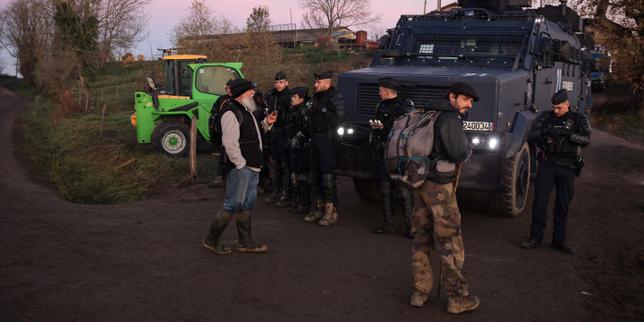
The French government has extended mandatory vaccination zones in Occitanie as contagious nodular dermatitis (DNC) cases have appeared in Ariège and Hautes-Pyrénées, prompting sanitary culling of cattle herds. A herd of 200 cows in Ariège identified with DNC is currently being culled by veterinary services accompanied by the gendarmerie, marking an intense phase of disease control efforts.
Carole Delga, President of Occitanie, announced €300,000 in emergency aid to support affected farmers, while emphasizing the necessity of respecting sanitary culling measures to protect livestock and prevent further outbreaks. Delga acknowledged the emotional toll on farmers but underscored disease control priorities.
However, the culling measures have sparked political controversy. Jean-Luc Mélenchon condemned the state's violent enforcement against farmers resisting herd culling, a sentiment echoed by Manon Meunier, who called for an end to systematic animal slaughter. Meanwhile, Jean-Jacques Bolzan criticized the state’s forceful approach towards farmers compared to other protests. In contrast, Arnaud Rousseau of the FNSEA stressed the importance of rationality, advocating immediate culling for public health and urging vaccination zones to expand to protect the wider cattle population.
The government’s extension covers several departments including Aude, Haute-Garonne, Gers, Pyrénées-Atlantiques, and Landes, with strict movement restrictions on cattle. Though DNC is not transmissible to humans, it threatens livestock health and remains a significant concern since its detection in France in June. The situation in Auvergne-Rhône-Alpes is reportedly stabilizing, but the expansion of the outbreak to Occitanie intensifies regional challenges.
Source articles (2)
-
lemonde.fr Dec 12, 2025
EN DIRECT, dermatose nodulaire : les premières vaches abattues dans une ferme de l’Ariège ont été chargées dans un camion
-
liberation.fr Dec 12, 2025
Dermatose nodulaire contagieuse : le gouvernement étend la zone d’obligation vaccinale
Source comparison
Culling process start date
Sources report different start dates for the culling process of the herd in Ariège.
lemonde.fr
"Veterinary services began the culling process."
liberation.fr
"Veterinary services, accompanied by gendarmerie, began the culling process on Friday morning."
Why this matters: Source 190740 states that the culling process began on Friday morning, while Source 190736 does not specify when the culling started. This discrepancy could impact understanding of the response timeline to the outbreak.