Prime Minister Sébastien Lecornu Threatens to Dissolve National Assembly Amidst Political Tensions
Prime Minister Sébastien Lecornu has threatened to dissolve the National Assembly amidst censure motions over the EU-Mercosur agreement, sparking criticism and political unrest.
Key details
- Prime Minister Sébastien Lecornu threatened dissolution of the National Assembly in response to censure motions related to the EU-Mercosur agreement.
- Legislative elections may be held alongside municipal elections on March 15 and 22, following Lecornu's directive to prepare.
- The threat was viewed as political coercion and criticized by former President François Hollande and Les Républicains leader Xavier Bertrand.
- A poll reveals nearly 80% of French citizens distrust the government's handling of the agricultural crisis, adding to political tensions.
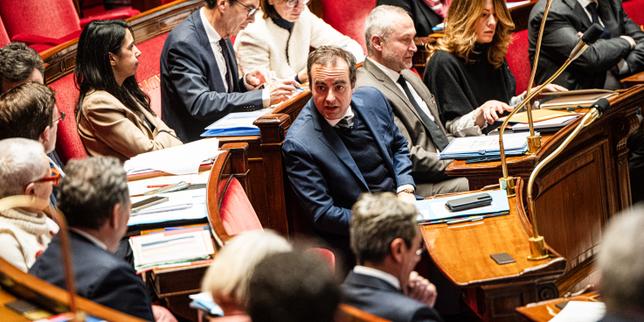
On January 9, 2026, French Prime Minister Sébastien Lecornu delivered a stark warning to the National Assembly, threatening to dissolve the legislative body in response to looming censure motions linked to the EU-Mercosur trade agreement—a contentious issue within French politics. Lecornu instructed Interior Minister Laurent Nuñez to prepare for possible legislative elections scheduled for March 15 and 22, coinciding with municipal elections, signaling a potential overlap that would heighten political stakes.
This move was widely viewed as a form of political coercion. Lawmakers perceived Lecornu's threat as blackmail aimed at stifling opposition voices amid the agricultural crisis that the government faces. A recent Odoxa-Backbone Consulting poll for Le Figaro underscored this crisis, revealing that nearly 80% of French citizens doubt the government’s ability to handle agricultural issues effectively.
Prominent political figures responded critically to Lecornu's tactic. Former President François Hollande condemned the threat, emphasizing that a prime minister's role is to ensure stability during uncertain times. Hollande described the dissolution threat as "counterproductive" and lacking rationale. Similarly, Xavier Bertrand, president of the Les Républicains party in Hauts-de-France, denounced the approach as undignified and inappropriate for democratic institutions, asserting that leadership should never be exercised through fear or institutional blackmail.
Further expressing political discontent, Jean-Luc Mélenchon, leader of the Insoumis party, took a scathing stance against President Emmanuel Macron, comparing him metaphorically to a "factory chicken" and criticizing the government’s disconnect from real political dynamics.
The political atmosphere remains tense as the threat of dissolution looms, with legislative elections potentially coinciding with municipal voting, intensifying the stakes amid widespread public skepticism about governance and crisis management. This development highlights the fragility and friction within France's political landscape as it grapples with domestic and international challenges.
Source articles (2)
-
lemonde.fr Jan 12, 2026
La dissolution de l’Assemblée nationale, la menace contre-productive de Sébastien Lecornu
-
lefigaro.fr Jan 12, 2026
Pour se prémunir d’une censure, Sébastien Lecornu agite le spectre de la dissolution