Renault CEO Links Investment in France to Economic and Political Stability Amid Interest Rate Pressures
Renault's CEO warns investments depend on stability amid rising interest rates, while industrial survey shows mixed sector performance in France.
Key details
- Renault CEO François Provost warns of potential investment cuts in France due to instability and rising interest rates.
- Increased interest rates affect leasing prices for vehicles, impacting Renault’s strategies.
- The Banque de France survey indicates sector-specific fluctuations with aeronautics and automotive showing strength amid supply challenges.
- Construction and certain manufacturing sectors face weak demand and production declines, adding to economic uncertainty.
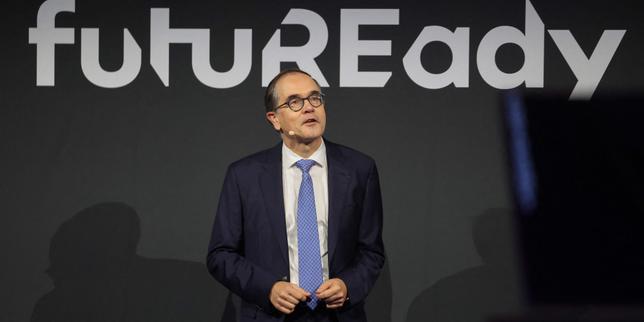
François Provost, CEO of Renault, has signaled potential reductions in the company's investments in France if economic, social, and political stability are not maintained. He highlighted that rising interest rates are contributing to increased tensions in the market, particularly affecting the prices of leased vehicles over multiple years. This financial environment poses significant challenges to Renault’s long-term investment strategy.
Meanwhile, the broader French industrial landscape reveals mixed signals. A recent Banque de France survey noted a slight increase in the capacity utilization rate to 76.8% in September, reflecting continued activity, especially within aeronautics and the automotive sectors. However, production in electrical equipment declined due to supply chain difficulties. Other sectors such as wood-paper-printing showed stabilization after previous declines, while clothing-textile-footwear experienced a rebound largely from delayed delivery catch-ups. Despite some sector-specific growth, fragile demand persists in areas like construction, which could exacerbate economic uncertainty.
Provost’s comments underscore the delicate balance facing French industry leaders, who are navigating supply chain issues, fluctuating consumer demand, and broader macroeconomic pressures. The hesitation to fully commit to investment without stability reflects a cautious business outlook amid variable market conditions.
As Renault weighs its financial and commercial strategies, the interplay of high interest rates and uneven sectoral performance may continue to shape France’s automotive investment climate. Aligning political and social stability with fiscal steadiness appears crucial for sustained industrial growth and investor confidence in the country.
Source articles (2)
-
lemonde.fr Oct 12, 2026
François Provost, le patron de Renault, conditionne ses investissements en France à « la stabilité économique, sociale et politique »
-
banque-france.fr Oct 12, 2026
Enquête mensuelle de conjoncture – Début octobre 2026