Toulouse Administrative Court Approves Continuation of Contested A69 Highway Construction
The Toulouse administrative court has authorized continued construction of the A69 highway after overturning a previous halt based on environmental grounds, while legal challenges over unauthorized land use persist.
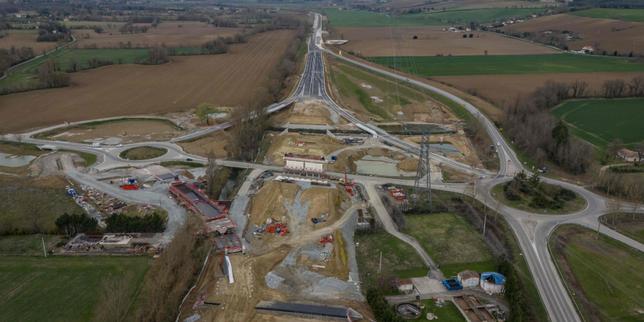
Key details
- The Toulouse administrative court of appeal validated the environmental authorization for A69 highway construction on December 30.
- The project is two-thirds complete with a budget of 450 million euros and expected to finish by October 2026.
- Minister of Transport Philippe Tabarot praised the decision as vital for regional development.
- Opponents are pursuing further legal actions concerning unauthorized land usage and environmental concerns.
- Construction resumed in May after being halted earlier in 2025 due to lack of major public interest justification.
On December 30, the Toulouse administrative court of appeal ruled in favor of continuing the construction of the A69 highway connecting Toulouse and Castres, confirming the environmental authorization previously challenged by environmental activists. This decision marks a crucial moment in a long-standing controversy surrounding the 53-kilometer project, which had been halted earlier in 2025 due to environmental concerns and a court ruling that had invalidated its environmental permit, citing a lack of "major public interest." The appellate court reversed that judgment, citing the significant public interest, highlighting the critical need for improved transportation links due to the population and employment demands in Castres, Mazamet, and the wider Tarn region.
The A69 highway is now two-thirds complete, with 300 million euros already invested out of a total budget of around 450 million euros. Minister of Transport Philippe Tabarot praised the ruling as a major triumph for regional development and infrastructure improvement, expressing optimism about meeting the projected completion date in October 2026. Despite the ruling, opposition groups like "La voie est libre" continue to express skepticism about judicial impartiality, pointing to areas of unauthorized land use acknowledged by the contractor Atosca. These violations have led to additional legal procedures scheduled for January 12, potentially impacting the project's future.
The project had initially faced suspension after last winter’s court decision invalidated the environmental authorization, but resumed construction in May following a request from the French state and Atosca. Environmental activists remain vigilant and intent on pursuing further judicial appeals, including plans to escalate the matter to the Council of State. Meanwhile, the Toulouse prosecutor has underscored significant environmental concerns tied to the project.
This ruling allows construction to continue uninterrupted despite ongoing litigation, underscoring the complex balance between infrastructure development and environmental protection at the heart of the A69 controversy.
Source articles (5)
-
lemonde.fr Dec 30, 2025
A69 : la justice va-t-elle décider de la poursuite des travaux ? Une décision-clé quant à l’avenir du chantier attendue pour mardi
-
liberation.fr Dec 30, 2025
A69 : décision clé attendue ce mardi sur l’avenir de l’autoroute contestée entre Toulouse et Castres
-
lefigaro.fr Dec 30, 2025
La justice donne son feu vert à la poursuite et à la fin des travaux de l’A69
-
Chantier de l’A69 : la cour administrative d’appel de Toulouse autorise la poursuite des travaux
-
A69 : la justice autorise la poursuite des travaux de construction de l’autoroute contestée entre Toulouse et Castres