UN High Commissioner Declares Violence Against Women a Global Emergency Amid Rising Worldwide Killings
UN High Commissioner Volker Türk warns that violence against women is a global emergency with 50,000 killings in 2024, highlighting systemic abuse and calling for justice and protection.
Key details
- Violence against women declared a global emergency by UN High Commissioner Volker Türk.
- Approximately 50,000 women and girls killed worldwide in 2024, mostly by family members.
- Cases of Gisèle Pelicot and Jeffrey Epstein cited as examples of systemic abuse.
- Call for investigations, victim protection, and impartial justice amid rising online misogyny.
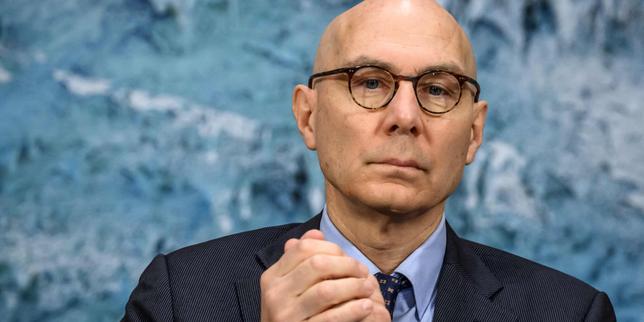
On February 23, 2026, during the 61st session of the UN Human Rights Council, UN High Commissioner for Human Rights Volker Türk sounded the alarm on violence against women, describing it as a "global emergency." Türk revealed that roughly 50,000 women and girls were killed worldwide in 2024, with most perpetrators being family members. He cited the case of Gisèle Pelicot from France, a victim of organized rape by her ex-husband and others, along with American offender Jeffrey Epstein, illustrating widespread exploitation and abuse. Furthermore, Türk expressed grave concern over systemic gender segregation in Afghanistan, comparing it to apartheid based on gender rather than race. He urged states to thoroughly investigate all alleged crimes against women, protect victims, and guarantee impartial justice. Türk also highlighted the surge in online attacks targeting women, especially public figures, noting that numerous women politicians report enduring persistent misogyny and online hate. This global emergency underscores the urgent need for coordinated international action to address and prevent violence against women.
In a related, yet separate political controversy in France involving Jeffrey Epstein, Interior Minister Laurent Nuñez condemned remarks by Jean-Luc Mélenchon, leader of La France Insoumise, that were widely criticized as antisemitic after he referred to Epstein as "Epstine" during a meeting in Lyon. Nuñez compared Mélenchon's rhetoric to that of known far-right figures with histories of antisemitism, underscoring the contentious nature of discourse surrounding Epstein’s case in the French political landscape.