Farmers in Toulouse Intensify Protests Against EU-Mercosur Deal Amid Government Impasse
Farmers in Toulouse escalate protests against the EU-Mercosur trade deal, causing major blockades and demanding government action as France struggles to resist the agreement.
Key details
- Farmers in Toulouse erected blockades on major highways causing significant traffic disruptions.
- Protests target government inaction on agricultural crises and opposition to the EU-Mercosur trade agreement.
- France’s ability to block the Mercosur deal weakened after Italy’s support, but government vows to seek improvements.
- European Commission increases Common Agricultural Policy funding to address farmers' concerns.
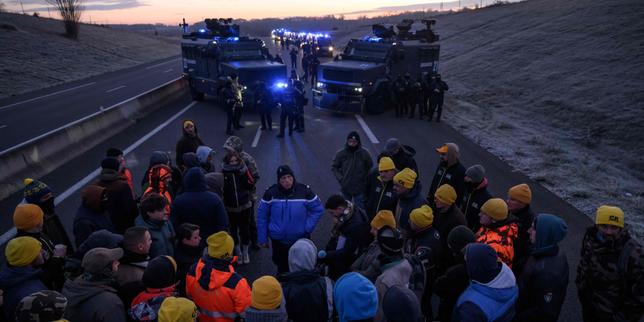
On January 7, 2026, farmers in Toulouse staged significant protests involving about a hundred vehicles and the erection of around ten blockades on major highways including the A68 and A64. Using tractors, straw bales, and manure, demonstrators aimed to paralyze the city to demand government action on agricultural crises and aggressively oppose the EU-Mercosur trade agreement, due to be signed soon. Despite a heavy police presence and prohibitions by the regional prefect citing risks to public order, the farmers persisted, causing traffic jams lasting hours and expressing frustration at unfulfilled government promises.
Lionel Candelon from the Coordination Rurale declared protests would continue until their demands are met. Key farmer grievances include opposition to systematic livestock culling during disease outbreaks and new fertilizer taxes. These protests are part of broader agricultural unrest fueled by fears of unfair competition from Mercosur imports and dissatisfaction with current policies.
At the political level, French Minister for Europe Benjamin Haddad acknowledged that France's ability to block the EU-Mercosur agreement has diminished after Italy’s support for the deal. He stressed that "the account is not there" for France and pledged to seek improvements, even as Italy prepares to sign the treaty. Meanwhile, a governmental decree suspending imports of certain agricultural products treated with banned pesticides is pending EU approval, reflecting efforts to protect farmers.
In response to farmers’ demands, European Commission President Ursula von der Leyen announced a boost in funding for the Common Agricultural Policy (CAP) with an early release of €45 billion by 2028, a move welcomed by President Macron as a means to secure agricultural aid through 2034. However, major agricultural unions like the FNSEA remain critical, demanding clear timelines on measures to counter the effects of the deal.
These protests in Toulouse echo wider agricultural demonstrations in regions such as Isère, where road closures and traffic disruptions have also occurred, signaling growing nationwide unease. The situation remains volatile as farmers vow to escalate actions, including planned convergence on Paris for further protests, while government negotiations continue.
Source articles (3)
-
publicsenat.fr Jan 7, 2026
UE-Mercosur : la France tente de résister, sous pression des agriculteurs
-
lemonde.fr Jan 7, 2026
Colère des agriculteurs : des dizaines de barrages autour de Toulouse malgré un déploiement important des forces de l’ordre
-
isere.gouv.fr Jan 7, 2026
Mouvement agricole - Situation en Isère - Actualités - Actualités - Les services de l'État en Isère
Source comparison
Date of EU-Mercosur agreement signing
Sources disagree on the date the EU-Mercosur trade agreement is set to be signed.
lemonde.fr
"the EU-Mercosur trade agreement, which is set to be signed on January 12."
publicsenat.fr
"Brussels plans to ratify it soon."
Why this matters: One source states the agreement is set to be signed on January 12, while another source indicates it is imminent with no specific date mentioned. This discrepancy affects understanding of the urgency and timeline of the agreement.